
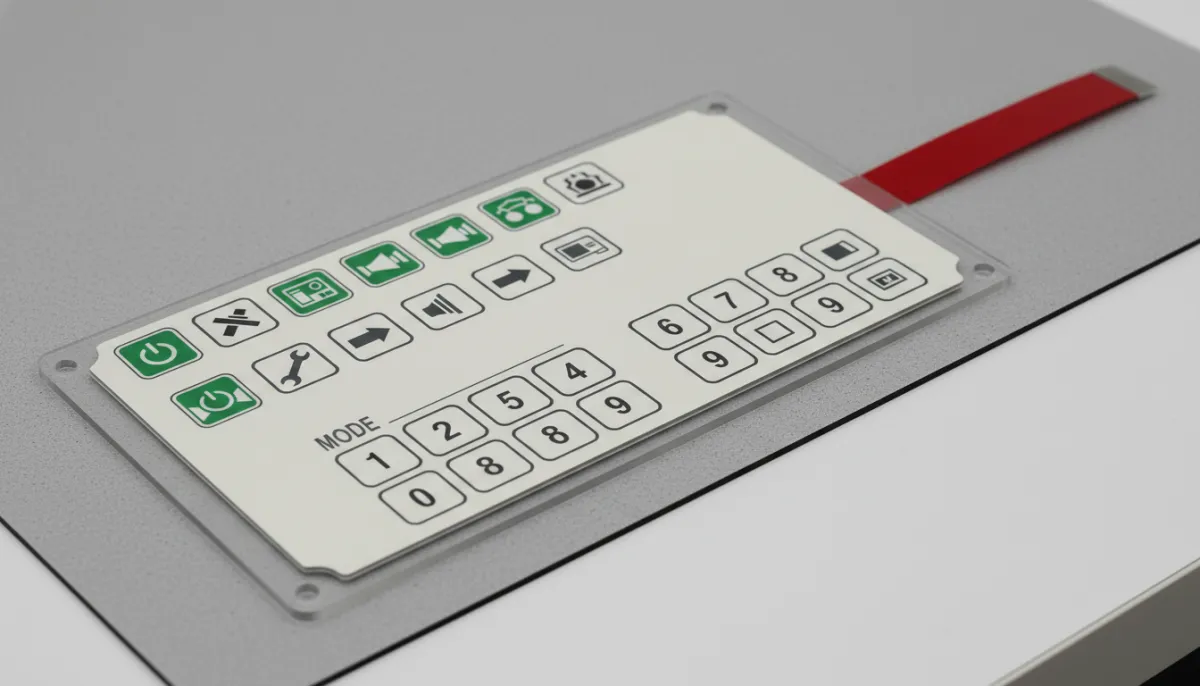
Discover the 12 essential criteria for ensuring high-quality membrane switches that enhance user experience and device reliability.
Membrane switches are vital components in modern electronic devices, with their quality significantly impacting user experience. To ensure we deliver top-notch membrane switch panel products to our customers, we implement a stringent quality control process. This article will outline 12 essential criteria for membrane switches available in the market.Key Criteria for Membrane Switches
1. Open and Short Circuit:- Switch circuits must not allow for open or short circuits.
- No fingerprints or foreign objects should be present on the circuit. The conductive surface must be smooth and uniform.
- The ink must fully cover the silver paste, ensuring that the silver paste does not protrude significantly.
- The acceptable tolerance for misalignment between the center positions of the upper and lower circuit contacts is ±0.2 mm.
- The surface of the switch must be smooth and clean. Rough surfaces can negatively affect user experience.
- Switches should withstand specific mechanical pressures, extending their lifespan.
- Membrane switches must be resistant to water and other liquids, enhancing the reliability of devices.
- Membrane switches used in high-temperature areas should be made from heat-resistant materials.
- Conductivity must meet certain standards. Low conductivity can adversely affect performance.
- The appearance of membrane switches creates the users' first impression. High-quality printing and design are crucial.
- Color harmony is essential for the overall quality of the product and user experience.
- Compliance with specific standards enhances product reliability. Certifications such as ISO and CE should be verified.
How Do They Work?
Membrane switches function through a simple circuit:- When a switch is turned on or off, the circuit is completed or interrupted.
- This mechanism controls the functions of electronic devices.
- Modern membrane switches enhance user experience by providing tactile and visual feedback.
- Durability: Membrane switches can withstand various environmental conditions.
- Aesthetic: They offer diverse design options.
- Lightweight: Easy to transport and install.
- They can be damaged if used incorrectly.
- Performance may decline under high temperatures or humidity.