
High-Quality Membrane Switch Manufacturing
Membrane switches are essential components that offer reliability and durability in industrial applications. Our membrane switches, produced with modern technology, meet your industry needs with their customized designs and long-lasting performance.
HAPPY CLIENTS
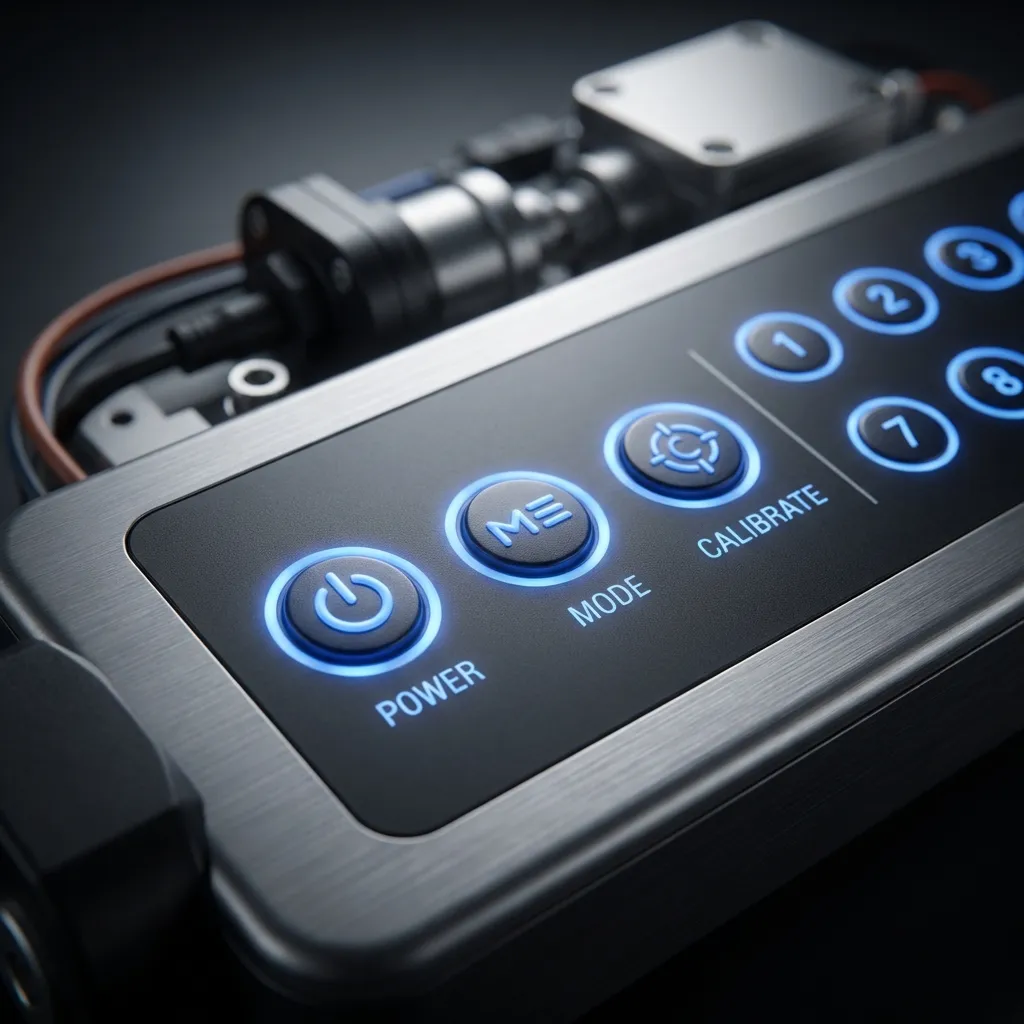
ms_principle_caption
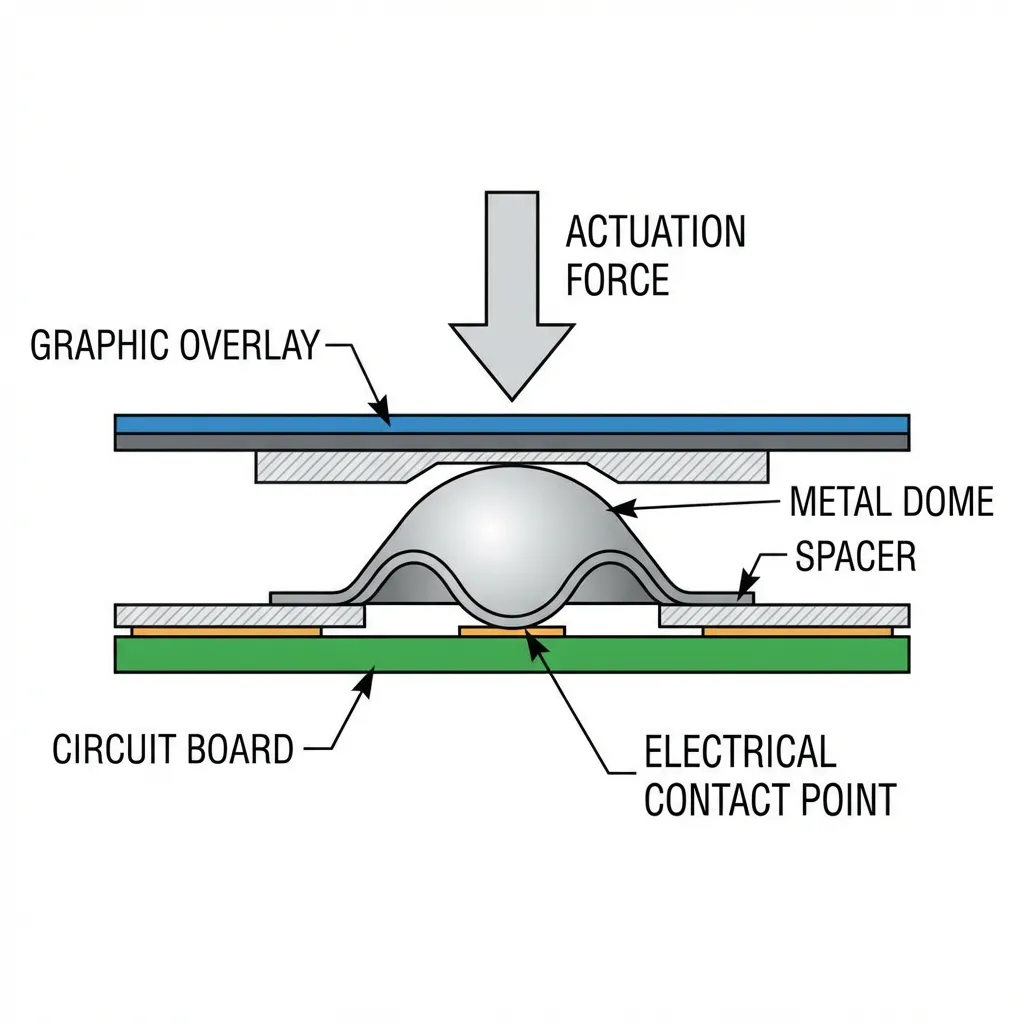
Response
Reliability
Working Principle of Membrane Switch
A membrane switch is an essential control mechanism used in many electronic devices today. These systems are designed to provide user interaction in a simple and effective manner. The working principle of membrane switches is primarily based on electrical connections between layers.
Working Principle:
- Layer Structure: Membrane switches typically consist of three main layers: the top surface, the bottom surface, and an intermediate layer. The top surface presents a keypad or graphical interface to the user, while the bottom surface forms the circuit.
- Touch Detection: When a user presses down on the top surface, an electrical connection is created between the two layers. This connection is established through the conductive paths found in the intermediate layer.
- Electrical Communication: Once the connection is made, the circuit is completed, sending a signal to the control board. The control board recognizes the user's action and responds accordingly.
- Durability and Longevity: Membrane switches are designed to be resistant to water, dust, and chemicals. These features make them ideal for industrial applications.
- Customizability: Membrane switches can be customized in various sizes, shapes, and graphic designs. This allows manufacturers to create unique designs that reflect their brand identity.
In conclusion, membrane switches offer an easy-to-use, durable, and customizable solution, making them widely preferred in many industries. With advanced technologies and design flexibility, these products play a significant role in enhancing user experience.
Technical Note
Thanks to silver-printed circuit paths and stainless steel dome structure, a clear and reliable transmission is ensured at every touch.
Why erb Membrane Switches?
Aesthetic Appearance
The modern design of membrane switches gives your devices a sleek and professional look.
Sensitive Touch
Advanced touch technology allows users to interact quickly and accurately.
Easy to Use
Its simple and intuitive design enhances user experience while minimizing training requirements.
High Quality
Made from durable materials, membrane switches offer long-lasting performance.
Reliability
Consistent performance even in harsh conditions provides a critical advantage for businesses.
Time Savings
Fast production processes ensure your projects are completed on time.
Cost Effectiveness
With excellent cost performance, you protect your budget while obtaining high-quality products.
Lightweight Design
Their low weight facilitates transportation and assembly processes.
Fast Delivery
Quick production and delivery processes provide immediate responses to your needs.
03. Technical Parameters
| Categories | Operating Voltage | Working Current | Contact Resistance | Insulation Resistance | Base Material Voltage | Rebound Time | Insulation Ink Withstand Voltage |
|---|---|---|---|---|---|---|---|
| Electrical Properties | 5V - 24V | 20mA - 100mA | 1Ω - 100Ω ms_spec_cable_length |
> 1MΩ | 0V | 1.5ms - 3ms | Screen printing ink |
| Mechanical Properties | Reliability Life | Key Displacement | Actuation Force | Silver Trace Width | Contact Pitch | ||
| 1,000,000 - 5,000,000 cycles | 0.2mm - 0.5mm | 150g - 300g | 0.2mm - 0.5mm ms_spec_ins_oil |
1.0mm - 2.0mm | |||
| Environment Properties | Operating Temperature | Storage Temperature | Atmospheric Pressure | ||||
| -20°C to 70°C | -30°C to 80°C ms_spec_humidity 95%±5% |
Low pressure | |||||
| Printing Index | Printing Size Deviation | Hollow Deviation | Color Difference | Others | |||
| ±0.1mm | ±0.5mm | ΔE < 3 |
Custom design capability
|
||||
Material Options and Comparison
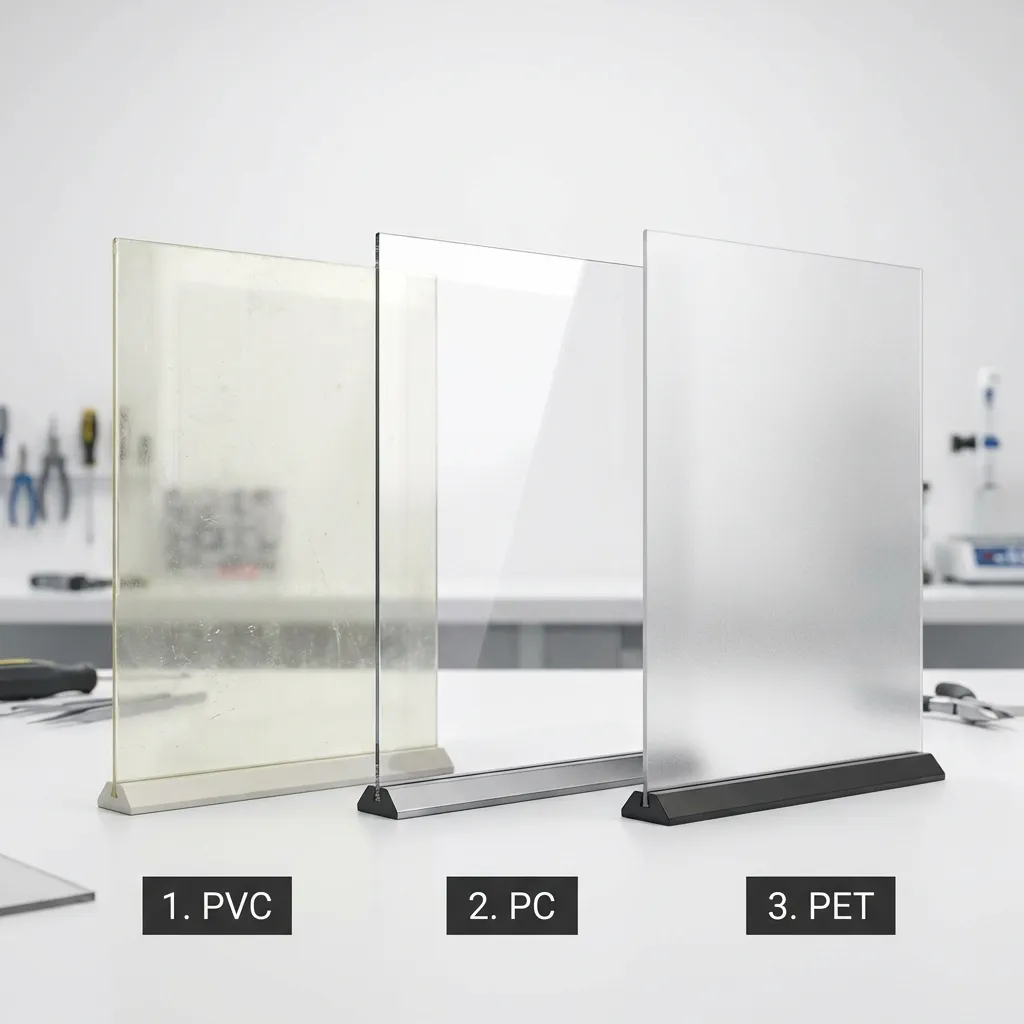
PVC (Polyvinyl Chloride)
PC (Polycarbonate)
PET (Polyethylene Terephthalate)
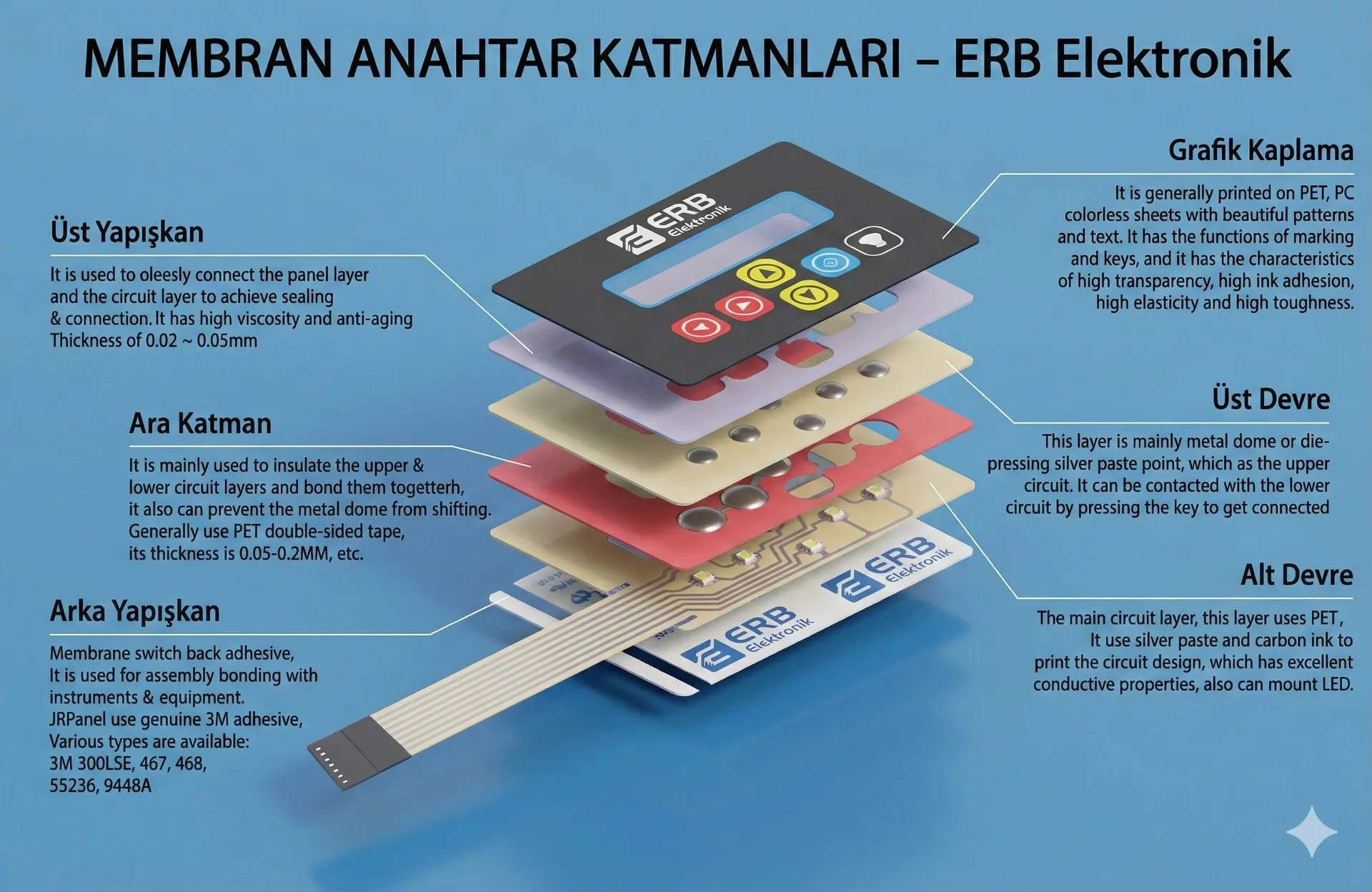
Graphic Overlay
Overlay Adhesive
Top Circuit Layer
Spacer
Lower Circuit Layer
Back Adhesive
05. Embossed Key Type
Membrane Switch Embossing Technology
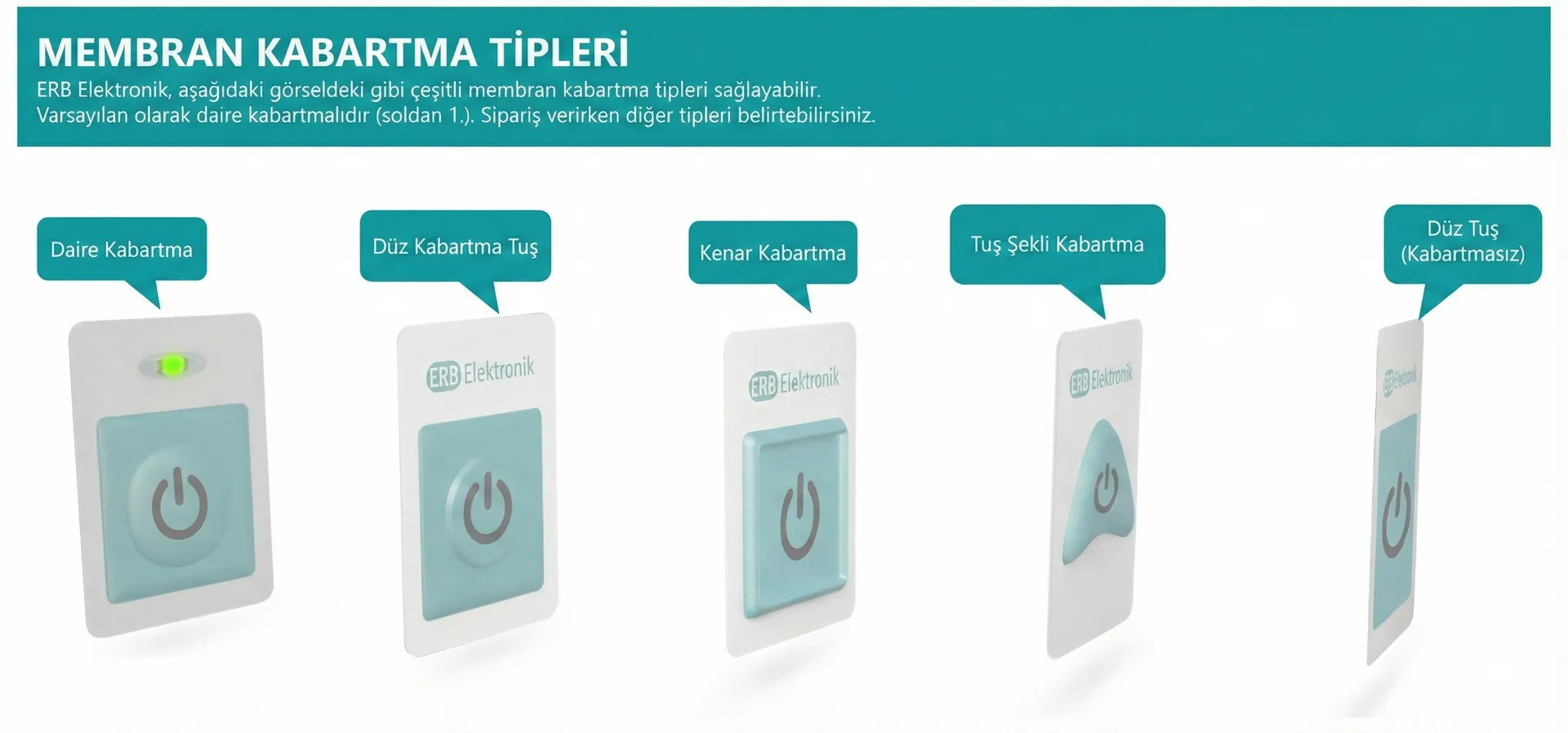
Membrane switches are widely used in industrial applications, providing durable and flexible control panels. Embossing technology plays a significant role in enhancing the user experience of these switches. Different types of embossing offer advantages in both tactile feedback and aesthetics. Here are the five most common types of embossing:
1. Circle Embossed (Hollow/LED Embossing)
Circle embossing is often used around LED indicators. This type of embossing allows users to feel that a specific button or indicator light is active. The tactile feedback is enhanced by the embossing around the button. Visually, the circular embossing provides a modern appearance and helps users easily distinguish the buttons on the panel.
2. Flat-Embossed Key
Flat-embossed keys offer a minimalistic and clean design. This type of embossing creates a slight elevation around the buttons, enhancing the tactile feedback users experience when pressing them. Aesthetically, flat surfaces provide a sleek look, complementing the design of modern devices.
3. Edge-Embossed
Edge embossing creates a distinct elevation around the buttons, making them more pronounced. This type of embossing helps users easily locate and differentiate the buttons. Tactile feedback is heightened by the feel of the edges. Visually, edge embossing offers a dynamic look, capturing users' attention.
4. Key-Shape Embossed
Key-shape embossing is a technique where buttons are designed with specific shapes or icons. This type of embossing enhances tactile feedback, allowing users to better understand which button they are pressing. Aesthetically, unique shapes enhance the originality of the design, improving the user experience.
5. Flat-Key (Non-Embossed Flat Key)
Non-embossed flat keys provide a smooth surface, offering a minimalist design. These types of keys typically do not provide tactile feedback, but they simplify users' interactions with the screen. Visually, flat keys offer an elegant and modern appearance, making them aesthetically appealing.
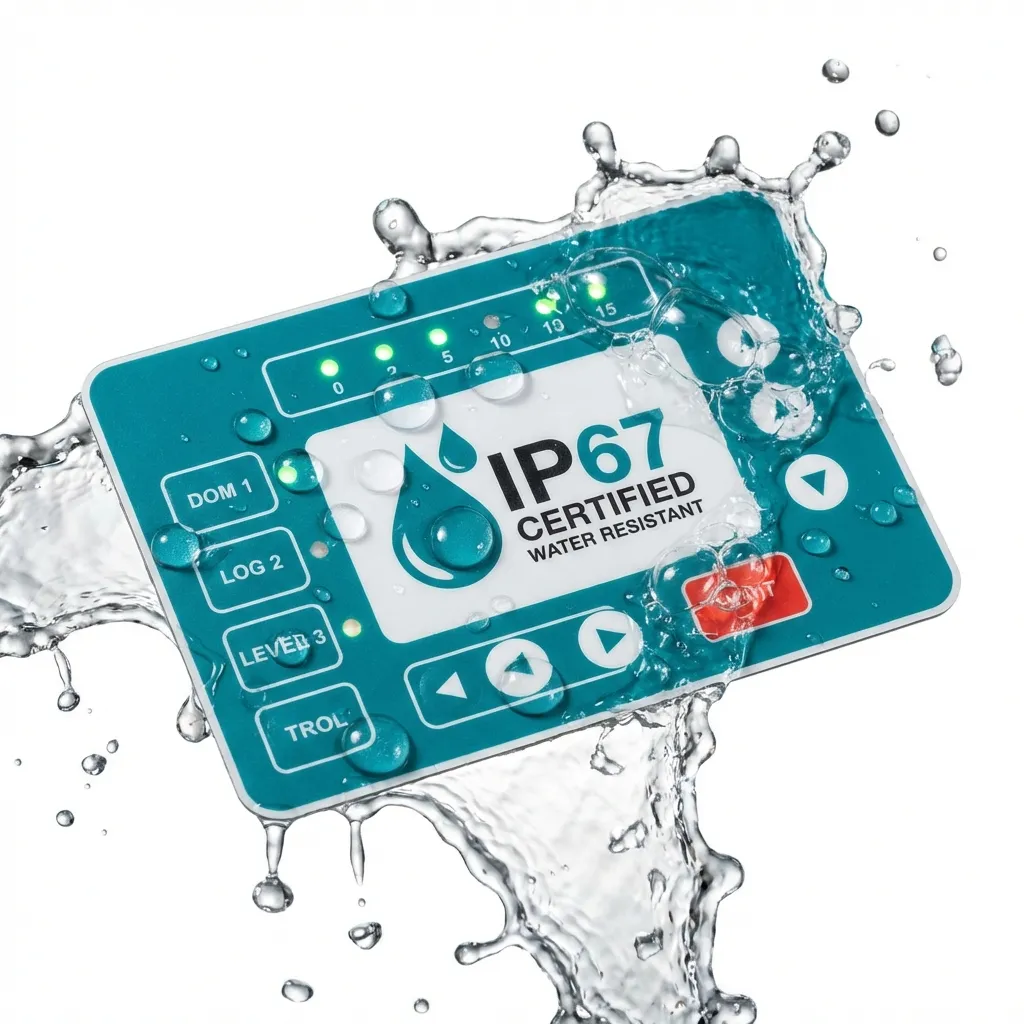
IP67 Waterproof Technology and Sealing Methods
Membrane switches are components commonly used in various industrial and commercial applications, notable for their waterproof features. One of the most prominent characteristics of these switches is their IP67 waterproof rating. IP67, under the International Protection (IP) coding, indicates how resistant a device is to dust and water. An IP67 rating signifies that the device is completely dust-tight and can withstand immersion in water up to a depth of 1 meter for a maximum of 30 minutes.
Several sealing methods are utilized to achieve waterproofing, enhancing the durability of the membrane switch. Among these methods, special sealing gaskets and adhesives are prominent. These gaskets are placed on the back of the switch, preventing water and other liquids from entering the internal mechanisms. Additionally, adhesives create a strong bond between the surface of the membrane switch and the mounting surface, providing further protection against external factors.
Another crucial aspect of making membrane switches waterproof is the materials used. Typically, water-resistant and chemically resistant materials such as polyurethane or PVC are preferred. These materials not only prevent water and other liquids from reaching the inner structure of the switch but also offer long-lasting usability.
In conclusion, thanks to IP67 waterproof technology and effective sealing methods, membrane switches can operate without losing performance even in harsh conditions. This is particularly vital in outdoor applications or in industrial areas where contact with water is frequent. Choosing a quality membrane switch extends the product's lifespan and reduces maintenance costs.
Liquid Protection
Full protection up to 1m depth for 30 minutes.
Dust Protection
100% sealing guarantee against the finest particles.
Industry Applications
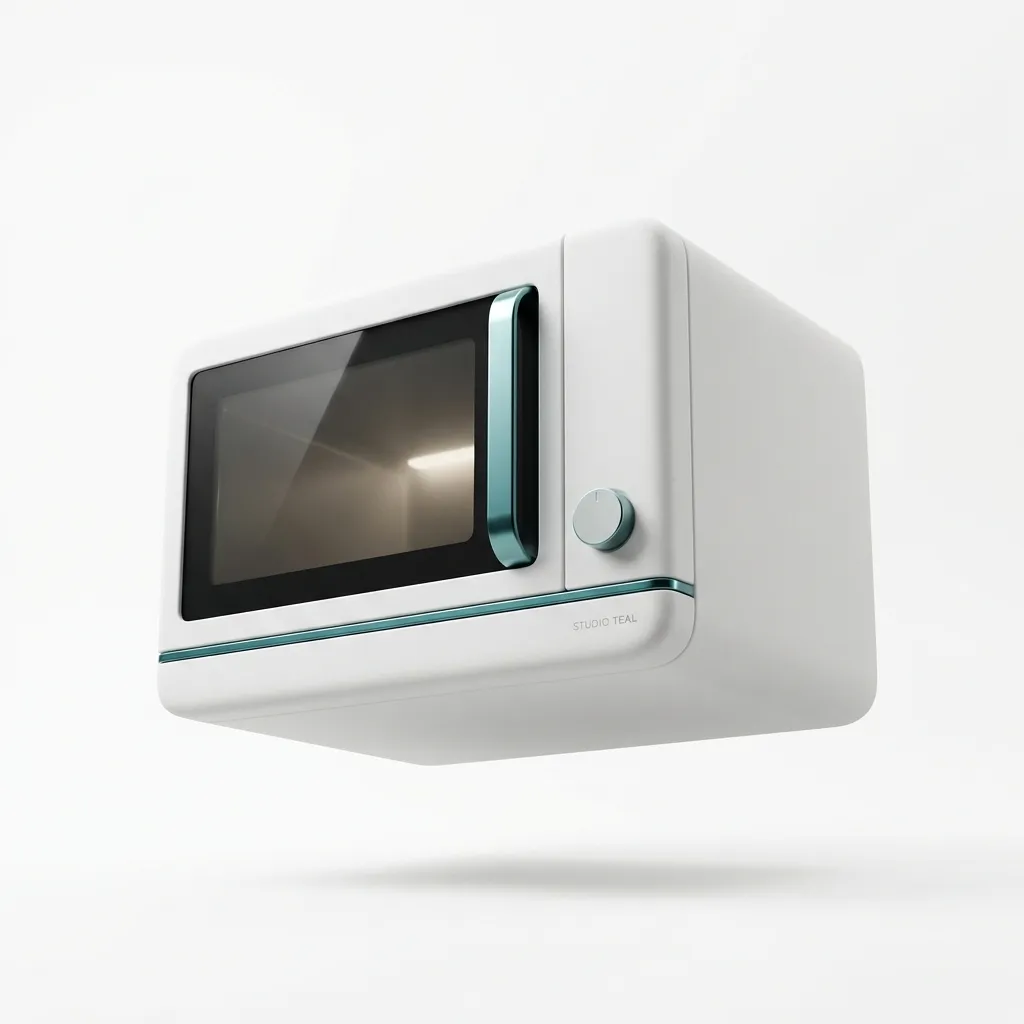
Medical Devices
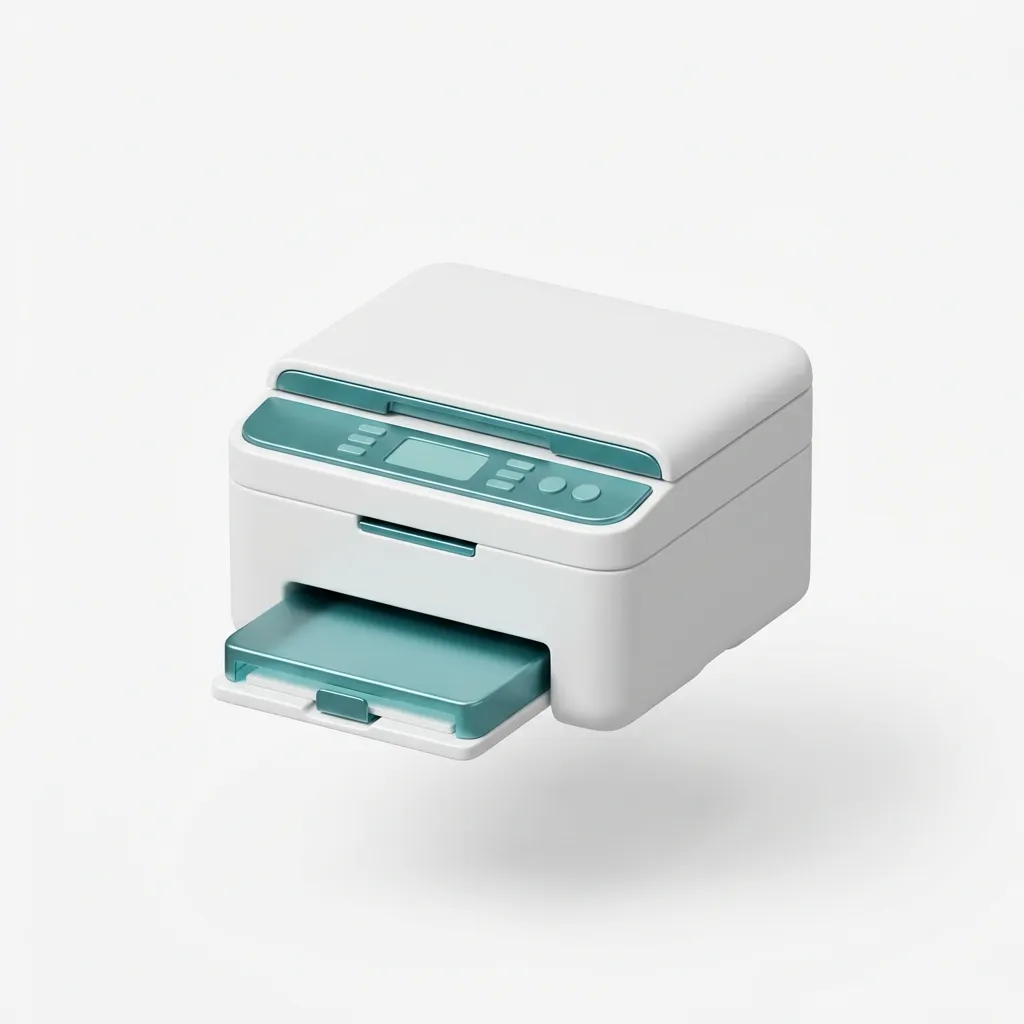
Industrial Controls
Consumer Electronics
Automotive Applications
Home Appliances
Ready to Custom Your Product?
Our engineering team will assist you with graphic design, structural layouts, and material choice.