
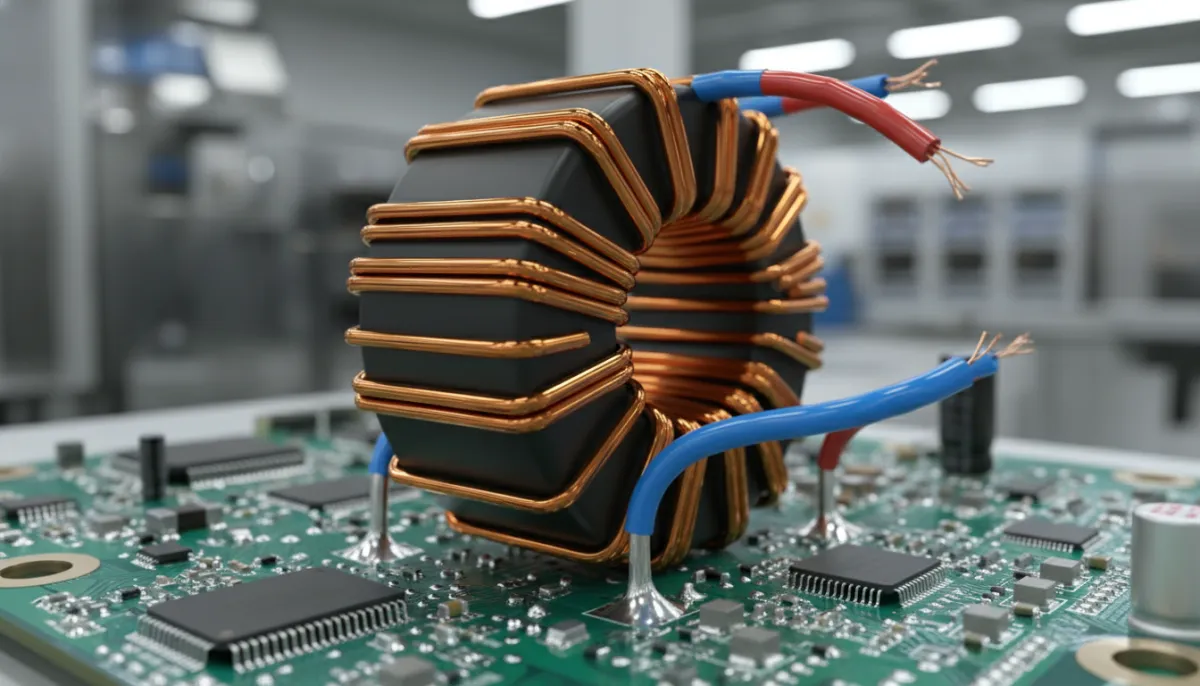
Explore essential strategies for enhancing the efficiency of high-frequency transformers in this informative article.
What Are High-Frequency Transformers?
High-frequency transformers are vital components utilized in electrical circuits that operate with alternating current (AC) at elevated frequencies. These transformers employ magnetic fields to transfer electrical energy from one circuit to another. Efficiency plays a pivotal role in the design of these transformers.
Enhancing the efficiency of high-frequency transformers not only contributes to energy savings but also offers significant advantages for environmental conservation. Ideally, the efficiency of these transformers should exceed 95%, with losses kept below 5%.
How High-Frequency Transformers Operate
The operational principle of high-frequency transformers is based on two primary types of losses:
- Core Loss (Iron Loss): Occurs in the transformer core and tends to increase at higher frequencies.
- Winding Loss (Copper Loss): Arises from the resistance in the windings and varies with frequency.
As the operating frequency of the transformer increases, winding losses typically decrease. However, due to skin effects and proximity effects, winding losses may rise. Thus, balancing these two losses is crucial in transformer design.
Ways to Enhance Efficiency- Material Selection: Using high-quality core and winding materials can reduce losses.
- Surface Treatments: The smoothness of the wire surface minimizes surface losses.
- Optimal Design: Careful calculation of the number of windings and the size of the core helps minimize losses.
Advantages
- Energy Efficiency: High efficiency leads to significant energy savings.
- Compact Size: Capable of delivering high power in smaller dimensions.
- Reduced Heating: Lower losses lead to fewer heating issues.
Disadvantages
- Complexity: The design process can be more intricate.
- Cost: The use of high-quality materials may elevate costs.
- Frequency Dependency: Performance varies at different frequencies.
- What are the advantages of high-frequency transformers? - They offer benefits such as energy efficiency, compact size, and reduced heating.
- What materials should be used? - It is recommended to use high-quality core and winding materials.
- What methods can be applied to improve efficiency? - Techniques such as material selection, surface treatments, and optimal design can be employed.
Efficiency in the design of high-frequency transformers is critically important from both economic and environmental perspectives. By employing the right materials and design techniques, the efficiency of these transformers can be significantly improved. The strategies discussed in this article can assist engineers in creating more effective designs.