
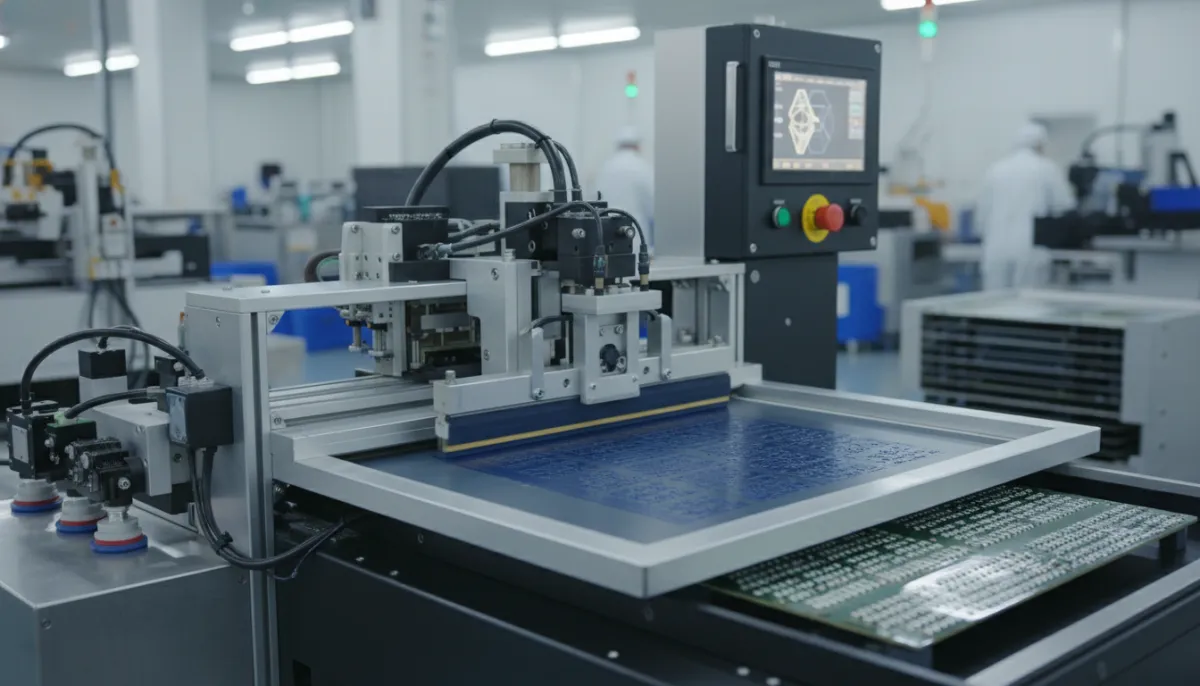
Explore the differences between semi-automatic and fully automatic screen printing machines and determine which is best for your production needs.
The Significance of Screen Printing
Screen printing plays an essential role in the production of Membrane Switch panels. This method involves applying graphics and text from the graphic layer, silver paste circuitry from the sub-circuit layer, insulation oil from the circuit layer, and freezing oil from the graphic layer onto a substrate.
Advanced screen printing technology is widely utilized across various industries. It can be executed using both semi-automatic and fully automatic machines. In this article, we'll explore the key differences between these two types of machines and the scenarios in which each should be favored.
How Semi-Automatic and Fully Automatic Machines Operate
The fundamental principle of screen printing includes the stages of ink mixing, film production, and stencil exposure. Initially, the ink is poured onto the graphic stencil. Subsequently, a squeegee in the screen printing machine moves at a consistent speed from one end to the other. During this process, the ink flows through the graphic area and is applied to various substrates (such as PC, PET, and acrylic).
Semi-automatic machines require the operator to manually perform certain steps, whereas fully automatic machines automate the entire process. In semi-automatic setups, the operator handles tasks like ink application and stencil placement, while fully automatic machines carry out all these tasks using robotic arms.
- Semi-Automatic Machines: Offer quick setup and low costs. However, they demand more labor and have limited production speed.
- Fully Automatic Machines: Provide high production speed and require less labor. However, their initial costs are higher, and they often need more maintenance.
Let's examine the advantages and disadvantages of both machine types:
Pros and Cons
Advantages of Semi-Automatic Machines:- Lower initial costs.
- Quick setup and adjustment capabilities.
- Ideal for small-scale productions.
- Require more labor.
- Production speed is limited.
- Higher likelihood of operator error.
- High production speed.
- Reduced human error.
- Suitable for long-term large-scale productions.
- High initial costs.
- Maintenance and repair costs can be significant.
- May require specialized training.
Use Cases
To grasp how screen printing operates, let's look at some use cases:
- Electronics Manufacturing: High-precision screen printing is employed in the production of membrane switch panels, enhancing product quality and customer satisfaction.
- Design Projects: Graphic designers can use semi-automatic machines to create more flexible and creative designs for custom projects.
- Large-Scale Production: Fully automatic machines facilitate the rapid production of a vast number of products, offering cost-effectiveness and competitive advantages.
Frequently Asked Questions
1. What is screen printing?Screen printing is the process of applying a layer of ink or paint to a surface through a stencil. This allows for the precise printing of graphics and text.
2. What is the main difference between semi-automatic and fully automatic machines?Semi-automatic machines require manual execution of certain steps, while fully automatic machines automate the entire process.