
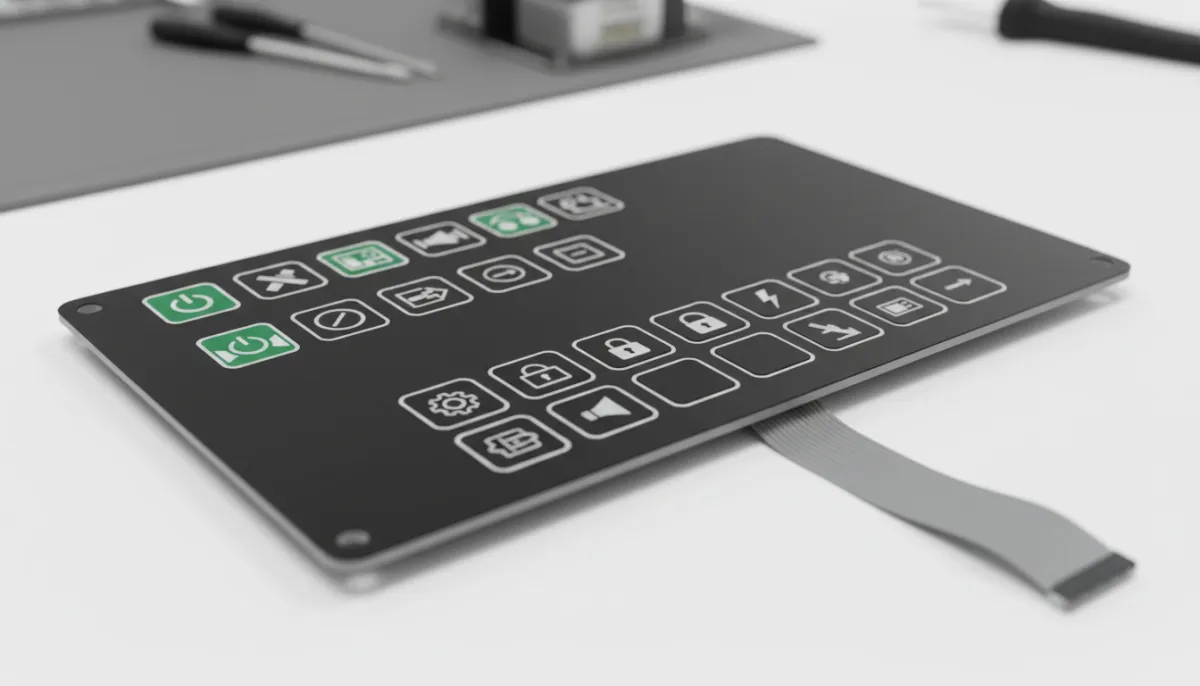
Discover the key principles and applications of membrane switches in electronic device design for optimal user experience.
Exploring Membrane Switches: Applications and Design Fundamentals
Membrane switches serve as essential control components in electronic devices, favored by both users and designers for several compelling reasons.- Simplified Structure: These switches are crafted with basic building blocks, making them practical for assembly.
- Aesthetic Appeal: They offer a sleek and innovative look that aligns with contemporary design trends.
- Durability: Resistant to dust, water, explosions, and corrosion, they boast an impressive lifespan.
- Ergonomics: The design must be tailored to the physical characteristics of the user, considering dimensions, shapes, and layout.
- Aesthetics: Visual appeal enhances user experience, making it crucial for the interface design to harmonize with the overall product aesthetics.
- User Experience: Users should find it easy to learn and comfortably interact with the interface.
- Home Appliances: Commonly used in smart home systems, kitchen devices, and various household gadgets.
- Healthcare Devices: Utilized in medical equipment for monitoring patients.
- Industrial Control Systems: Preferred in manufacturing processes and automation systems.
- Advantages:
- Long-lasting durability.
- A diverse range of design options in terms of aesthetics and functionality.
- Ease of installation and maintenance.
- Disadvantages:
- Potential shortcomings in user comfort.
- Can negatively impact user experience if poorly designed.
- Cost variations depending on technology.
- How durable are membrane switches? - Generally, they have a long lifespan, although this can vary based on environmental conditions.
- How should membrane switches be cleaned? - It's usually recommended to wipe them with a damp cloth, avoiding chemical cleaners.
- What should be considered for ergonomic membrane switch design? - They should be designed with sizes and shapes suitable for users' hand structures.