
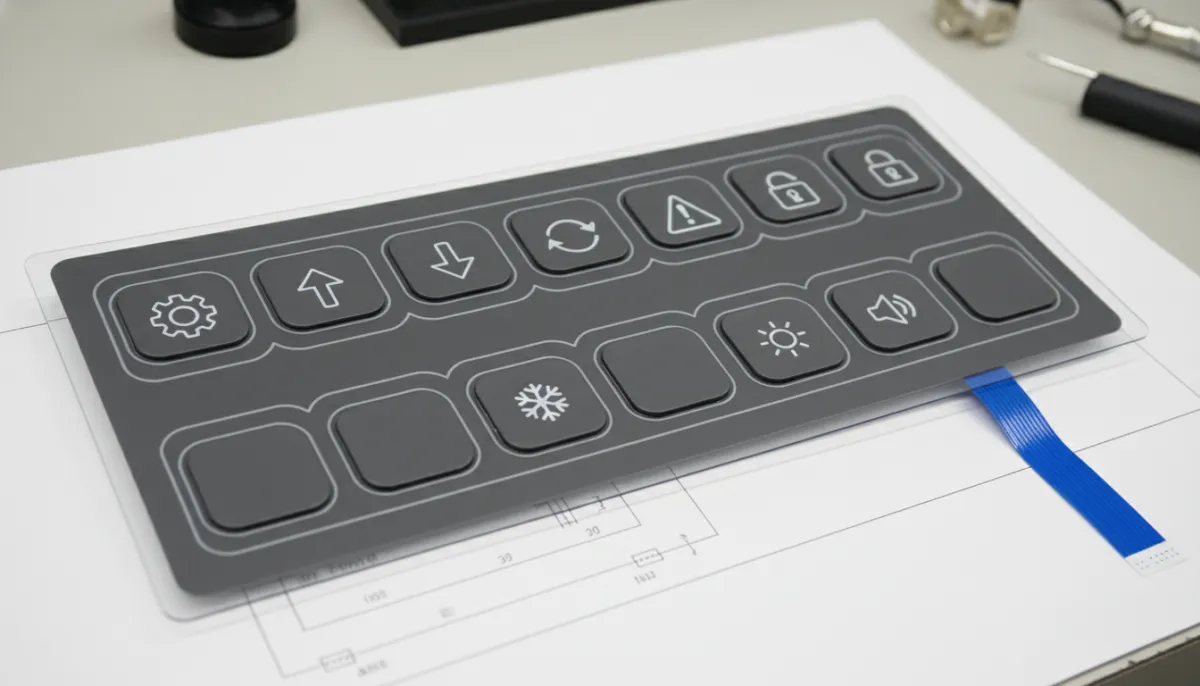
Explore the importance of color design in membrane switches for enhanced aesthetics and functionality in various industries.
What Are Membrane Switches?
Membrane switches have become an essential component in modern electronic devices. These switches integrate several functions, including panel decoration, display windows, key connections, and wiring.Due to their compact size, lightweight nature, pressure-sensitive adhesive properties, and cost-effectiveness, these switches are favored across various sectors such as electronics, machinery, shipbuilding, and aerospace.
The Significance of Color Design
Color design creates the first impression of a product and enhances its competitiveness by adding value.- In Lexan label design, an effective color scheme is a shared expectation among designers, manufacturers, and customers.
- In industrial design, a skilled designer can align colors with the aesthetic sensibility of most people.
Color coordination ensures that a graphic overlay is not only visually appealing but also functional.
Key considerations in the color design of membrane switches include:- The graphic overlay must be compatible with the entire machine.
- Sleek and simple colors should be chosen that align with the product features.
- Bright colors should be used judiciously and avoided in large areas.
- Harmony of colors with environmental factors.
- Aesthetic preferences of the target audience.
- Color selection based on the product's intended use.
- Lightweight and compact structures.
- Integration of multiple functions.
- Cost-effective production capabilities.
- Easy customization of aesthetic appearances.
- They may not be very durable.
- Their resistance to harsh environmental conditions, such as high temperatures or humidity, may be limited.
- In medical devices, they provide easily accessible and cleanable surfaces for users.
- In home appliances, they enhance user experience by combining aesthetics and functionality.
- In the automotive sector, they offer a modern and sleek appearance for vehicle controls.
- How durable are membrane switches? - Durability depends on the materials used and the manufacturing process. Generally, they are less durable in abrasive environments.
- What should be considered in color design? - Color harmony should align with the overall aesthetics of the product and its usage purpose.
- Where are membrane switches used? - They are preferred across a wide range of applications, from medical devices to home appliances, automotive sectors, and industrial machinery.