
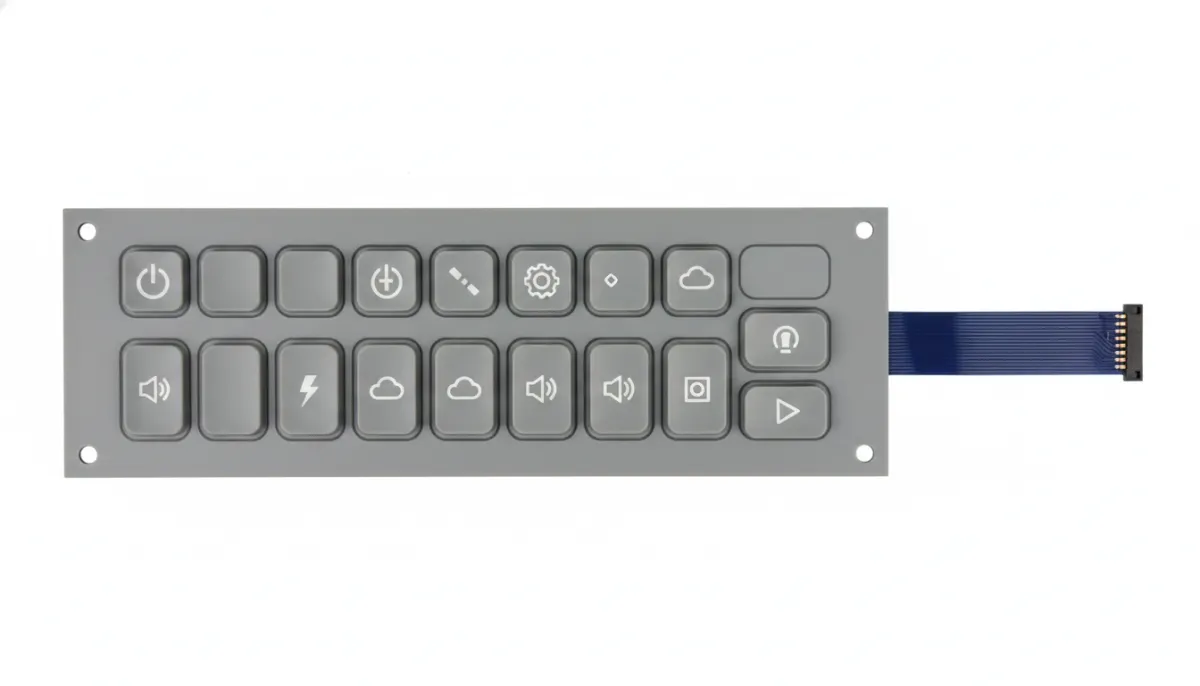
Discover the significance of 3M adhesives in membrane switches and explore their types, advantages, and applications in electronics.
The Role of Membrane Switches and 3M Adhesives
Membrane switches play a pivotal role in contemporary electronic devices. These simple yet effective components are typically coated with a flexible and durable surface, enabling users to interact with their devices seamlessly. 3M offers a range of high-quality adhesives tailored for such applications. In this article, we will explore the various types of 3M adhesives used in membrane switches and their specific applications.
Types of 3M Adhesives
3M provides a diverse selection of adhesives designed for different applications and requirements:
- Non-woven Cotton Paper Adhesive: This type consists of a non-woven fabric backing combined with an acrylic adhesive. Examples include 3M9448, 3M9080, and 3M9075. They offer excellent adhesion and workability, with a long-term temperature resistance of 70-80°C and short-term resistance up to 100-120°C. Typical thickness ranges from 0.08 to 0.15 mm, making them suitable for various industries including automotive, mobile phones, and electrical appliances.
- Non-Backing Pure Adhesive: Products like 3M467, 3M468, and 3M9473 fall into this category. They provide exceptional adhesion, preventing detachment, and boast high waterproofing capabilities with temperature resistance reaching 204-230°C. Their thickness is generally between 0.05 and 0.13 mm.
- PET Backing Adhesive: This adhesive is made from PET double-sided tape combined with an acrylic adhesive, exemplified by 3M9495MP. It showcases particularly strong and long-lasting bonding performance.
Each of these adhesives is optimized to cater to specific needs and application scenarios.
How Do They Work?
The functionality of 3M adhesives is based on the interaction of acrylic adhesives with surfaces. They form a robust bond upon application, ensuring durable and reliable adhesion. For instance, when a membrane switch is affixed to a device's surface using these adhesives, it guarantees mechanical strength along with aesthetic appeal.
Advantages and Disadvantages- Advantages:
- Strong adhesion: 3M adhesives provide effective bonding across various surfaces.
- Durability: They offer long-term resistance to temperature and humidity.
- Diversity: Numerous options are specially formulated for different applications.
- User-friendly: They provide an easy application experience.
- Disadvantages:
- Higher cost: Quality adhesives tend to be more expensive.
- Specific application requirements: Each adhesive type yields optimal results under certain conditions and surfaces.
- Weather sensitivity: Some adhesives may experience performance degradation under extreme temperatures or humidity.
- Why should I choose 3M adhesives?
They are preferred for their high adhesion strength, durability, and wide range of applications. - How can I determine which 3M adhesive to select?
It's important to choose the most suitable adhesive based on your application, material type, and environmental conditions. - Are 3M adhesives waterproof?
Yes, many 3M adhesives possess waterproofing properties.
Founded in 1902, 3M is an American company renowned for developing innovative products. Adhesive technologies are among the company’s core areas of expertise, with 3M being a global leader in acrylic adhesives, which are utilized across a broad spectrum of applications from industrial uses to consumer products.