
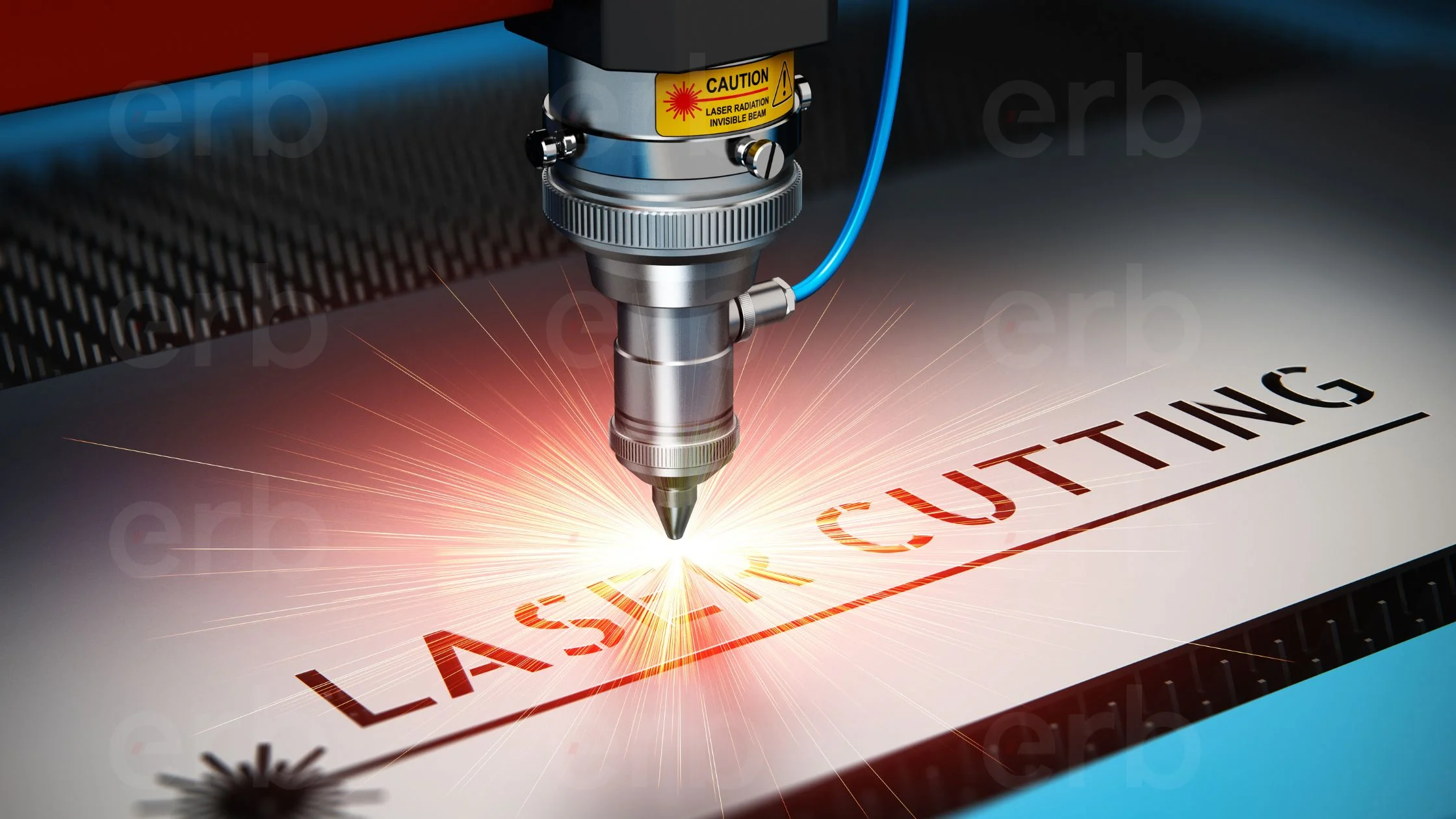
Explore how to evaluate laser cutting quality with insights on key elements like smoothness and perpendicularity for superior results.
Evaluating the Quality of Laser Cutting Machines
Laser cutting machines have become widely adopted across various industrial sectors, thanks to advancements brought about by Industry 4.0. Assessing cutting quality is the most straightforward way to evaluate the performance of these machines. So, how can we measure cutting quality?
Key Elements of Cutting Quality- Surface Smoothness: The laser cutting process creates vertical lines. The depth of these lines determines the roughness of the cut surface. Shallower lines result in a smoother finish. The level of roughness affects both the appearance of the edge and its friction properties. Ideally, roughness should be minimized; therefore, the shallower the lines, the higher the cutting quality.
- Cutting Perpendicularity: When the thickness of the metal sheet exceeds 10 mm, the perpendicularity of the cut edge becomes critical. As the cut moves away from the focal point, the laser beam begins to diverge, causing the cut to widen either at the top or bottom, depending on the focal point's position. The edge can deviate from perfect perpendicularity by several hundred micrometers. The more perpendicular the edge, the higher the overall cutting quality.
- Cut Width: Generally, cut width does not significantly affect cutting quality. However, it is dependent on the material and the cutting process. Cut width can vary based on the power of the laser used and the cutting speed.
Assessing Cutting Quality
When evaluating cutting quality, it is important to consider the factors mentioned above. Surface smoothness and perpendicularity are critical factors that directly influence the quality of the final product. For instance, in the automotive or aerospace industries, parts must fit precisely and meet high aesthetic standards, making these factors extremely important.
Application ScenariosLaser cutting machines are utilized in various industrial applications:
- Automotive Industry: High cutting quality and precision are essential for cutting automobile components.
- Aerospace Industry: Smooth edges and perfect perpendicularity are crucial when cutting airplane parts.
- Construction Sector: Laser cutting machines are frequently used in the production of metal structures and decorative elements.
- Advertising and Design: In graphic design, laser cutting allows for the creation of custom shapes and designs.
- Advantages:
- High precision: Laser cutting machines can achieve cuts with very fine tolerances.
- Diverse material options: Ability to cut various materials such as metal, wood, and acrylic.
- Low surface roughness: Post-cutting surface roughness is minimal, enhancing the final product quality.
- Disadvantages:
- High initial cost: Laser cutting machines can be more expensive compared to other cutting methods.
- Material limitations: Some materials may not be suitable for laser cutting.
- Operating costs: Energy consumption and maintenance costs can be high in the long term.
- How does a laser cutting machine work? Laser cutting machines operate by focusing a high-powered laser beam onto a material, either melting or vaporizing it to create a cut.
- What can I do to improve cutting quality? To enhance cutting quality, it's essential to adjust the laser power, cutting speed, and focal point correctly.
- What materials are suitable for laser cutting? Metals, wood, acrylic, plastics, and certain composite materials are appropriate for laser cutting.