
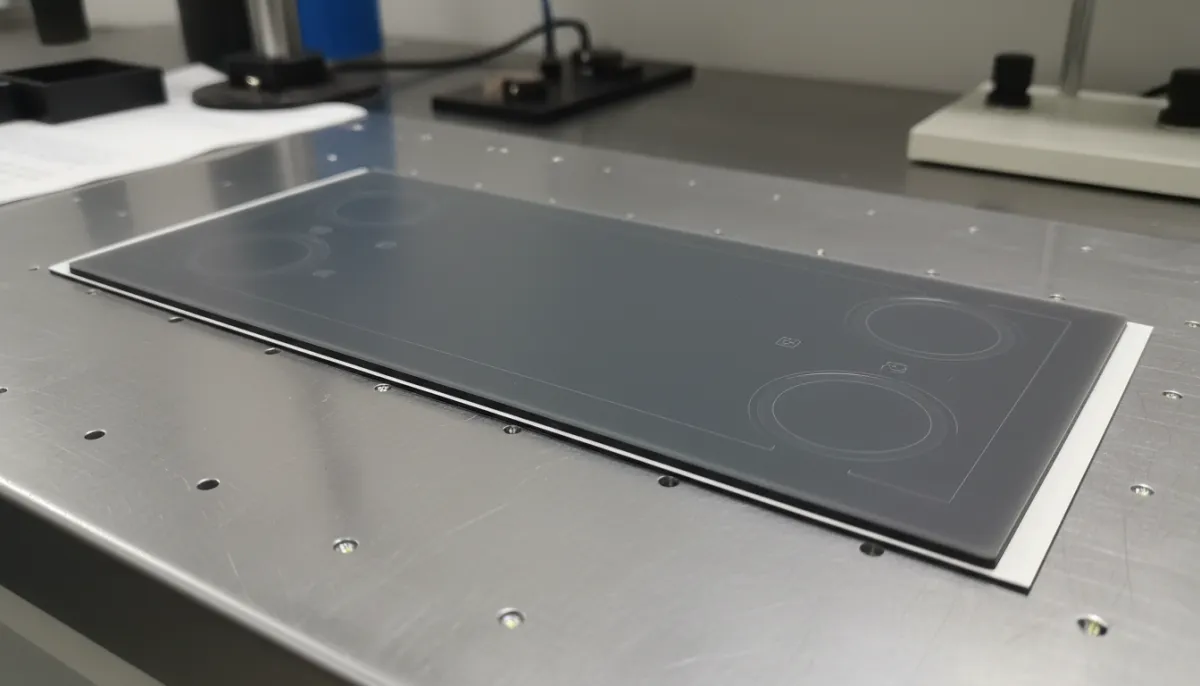
Explore how capacitive touch technology is transforming home appliances, offering modern aesthetics and improved functionality.
The Role of Capacitive Touch Technology in Household Devices
Capacitive touch technology has become a popular interface between humans and machines in today's home appliances. By replacing mechanical buttons and levers, this technology enhances the modern aesthetic of devices. The integration of capacitive touchscreens in kitchen and laundry machines among white goods has notably improved user experience.
Once a mere concept, this technology has now found real application in numerous high-end household appliances. With the advent of the Internet of Things (IoT), it's anticipated that touchscreens will be incorporated into more affordable devices. For users, the combination of internet connectivity and app-supporting functions means that touch-enabled human-machine interfaces (HMIs) can resolve a variety of operational challenges while providing an attractive interface.
How Does Capacitive Touch Technology Function?
This technology operates by detecting electric charge. When a user touches the screen, their finger alters the electric field on the surface. This change is recognized by sensors within the device, which then processes the appropriate commands. Here are some common applications of this technology:
- Home Appliances: Devices like food processors, washing machines, and refrigerators allow user control through touch.
- Smart Thermostats: Touchscreens can be used to easily adjust temperature settings.
- Smart Lighting: Touch panels can manage the home’s lighting system.
Benefits:
- Aesthetic Appeal: Capacitive touchscreens enhance the visual appeal of home appliances with their sleek design.
- Easy Cleaning: With their flat surfaces, they can be easily cleaned of dirt such as water and grease.
- Durability: They have less risk of wear compared to mechanical buttons, resulting in longer lifespans.
Drawbacks:
- Sensitivity: They may misinterpret touches when wet or greasy fingers are used.
- Cost: They may come at a higher price point compared to mechanical components.
- Are capacitive touchscreens waterproof?
Generally, capacitive touchscreens are water-resistant, but they can misinterpret inputs in cases of water droplets. - Where is capacitive touch technology used?
It's utilized in home appliances, smartphones, tablets, and various industrial applications. - How durable are capacitive screens?
Capacitive screens tend to be more durable than mechanical buttons; however, caution is needed against impacts.
Looking ahead, the prevalence of capacitive touch technology in household appliances is expected to rise, significantly enhancing user experience and functionality as a key element of the smart home concept.