
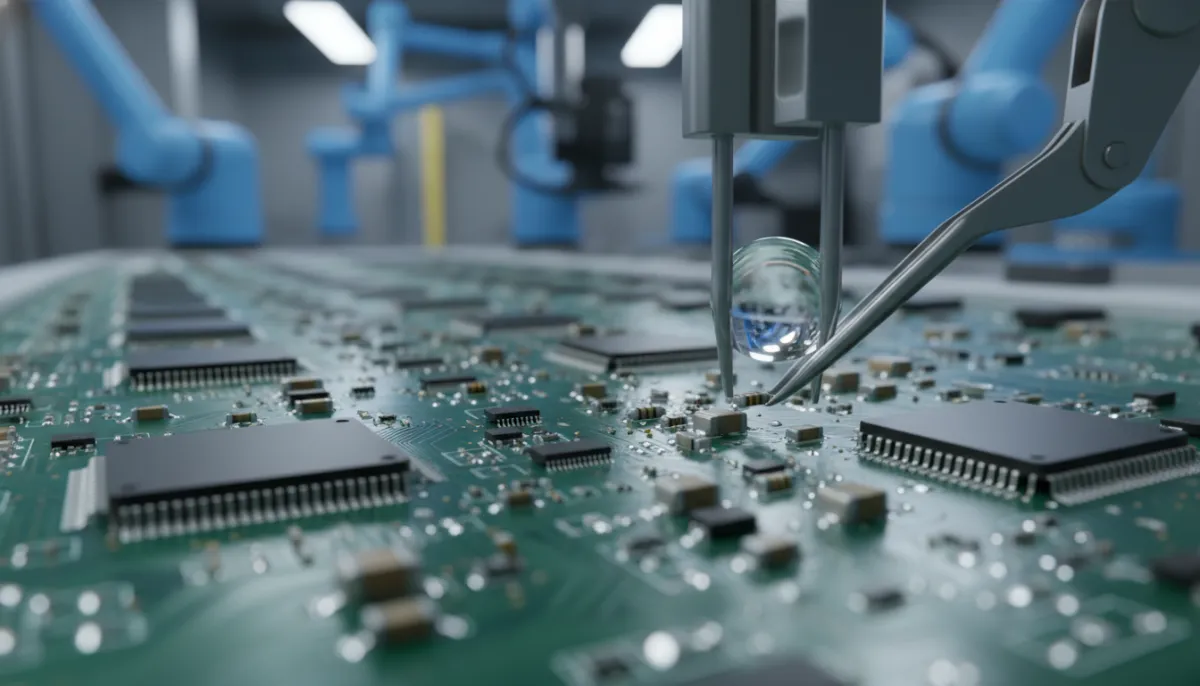
Explore effective strategies for enhancing the efficiency of high-frequency transformers, crucial for energy savings and environmental protection.
High-Frequency Transformers and Their Efficiency
High-frequency transformers play a vital role in power supplies and electronic devices. Boosting their efficiency not only leads to energy savings but also offers significant social and economic benefits in terms of environmental protection. Thus, improving the operational efficiency of high-frequency transformers is a fundamental requirement in engineering design.
Generally, the efficiency of these transformers should exceed 95%, with losses kept below 5%. There are two primary types of losses associated with high-frequency transformers:
- Core loss (iron loss)
- Winding loss (copper loss)
How Do They Operate?
To grasp the losses in transformers, it's essential to examine how iron and copper losses change with operating frequency. For instance:
- When the voltage applied to the transformer remains constant, a lower operating frequency results in a higher number of winding turns, consequently increasing copper loss.
- At a power frequency of 50 Hz, copper loss significantly surpasses iron loss. For example, in a three-phase oil-immersed silicon steel power transformer operating at 50 Hz, copper loss is about five times greater than iron loss.
As the frequency increases, the number of winding turns decreases. While the skin effect and proximity effect lead to an increase in winding loss, the overall trend shows that copper loss decreases with rising operating frequency. However, iron loss, which consists of hysteresis loss and eddy current loss, tends to rise rapidly as frequency increases.
At a certain frequency, copper loss and iron loss may equalize; however, exceeding a specific frequency will result in iron loss exceeding copper loss. This is the reason why iron loss is not equal to copper loss.
Benefits and Drawbacks- Benefits:
- Energy efficiency is enhanced, leading to cost savings.
- Environmental impacts are reduced; lower energy consumption translates to decreased carbon emissions.
- Higher efficiency contributes to less overheating of the system and extends its lifespan.
- Drawbacks:
- High-frequency transformers can be more complicated in terms of design and production.
- Systems operating at high frequencies may incur higher costs.
- Managing and optimizing losses may require more advanced engineering knowledge and experience.
- What are the advantages of high-frequency transformers?
Advantages include energy savings, reduced environmental impact, and longer lifespan. - What is the difference between iron loss and copper loss?
Iron loss arises from the core materials, while copper loss is due to the current in the windings. - How can efficiency be improved?
Improvement can be achieved by using better materials, optimizing designs, and selecting appropriate operating frequencies. - Where are high-frequency transformers used?
These transformers are commonly utilized in power supplies, electronic devices, and industrial applications. - What is the cost of improving efficiency?
The cost varies depending on the materials used and the complexity of the design.