
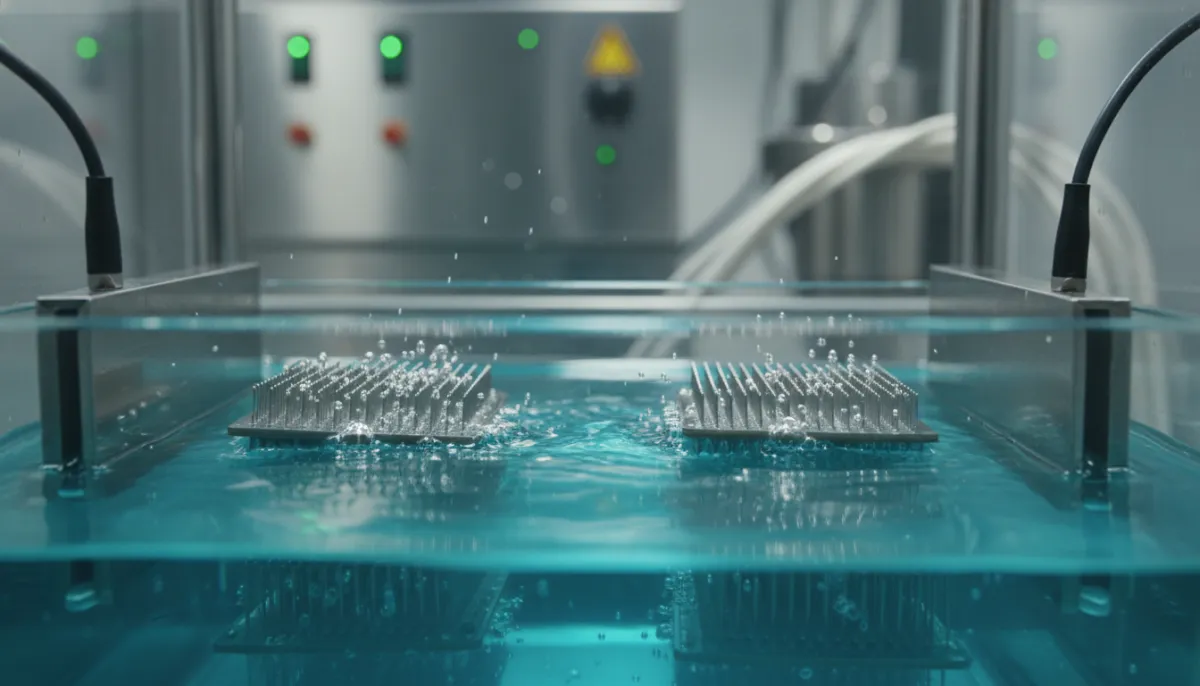
Explore how electroplating technology enhances the design and performance of medical devices through improved durability and surface characteristics.
What is Electroplating Technology?
Electroplating is the process of coating metal or plastic surfaces with a thin layer of metal. This technique involves immersing the parts to be coated in a series of chemical solutions. Typically, the process includes one or more cleaning steps, an activation step, and the electroplating step itself.Electroplating is particularly crucial in sensitive applications such as medical devices. The system enhances the surface characteristics of the components, thereby improving their overall performance.
How Does Electroplating Work?
- Initially, the components are subjected to a specialized cleaning process.
- Next, the parts are dipped into an activation solution.
- Finally, the components are placed in an electrolyte bath where an electric current is applied.
Application Scenarios
In the design of medical devices, electroplating can be used in a variety of scenarios:- Electrical Connections: Electroplating enhances the durability of electrical connections through the use of precious metals like gold.
- Corrosive Environments: In cases where medical devices come into contact with liquids, electroplating provides surface protection.
- Precision Instruments: The durability and precision of surgical instruments are improved thanks to the fine metal coatings provided by electroplating.
- Increases surface durability.
- Offers aesthetic appeal through metal coating.
- Special metal alloys can be used to enhance functionality.
- The process can be costly.
- There are limitations to the thickness of the coating.
- Environmental impacts and waste management are necessary considerations.
The Background of the Technology Electroplating is a widely used method in industrial applications. Initially, it was employed to protect and enhance the durability of precious metals. With advancements in technology, it has begun to play a significant role in medical device design as well.
This process provides innovative solutions in both industrial and medical fields, enhancing the quality and safety of products.