
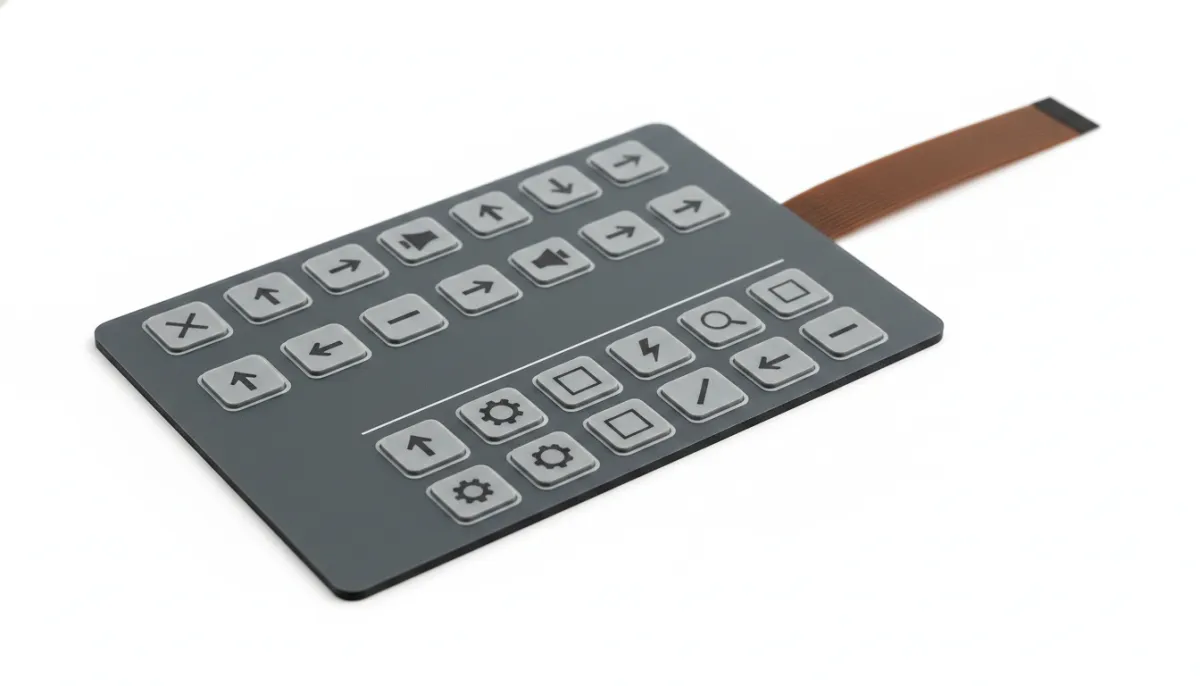
Explore the innovative design elements of membrane buttons, focusing on personalization and user experience.
Enhancing User Experience Through Membrane Button Design
The design of membrane buttons is a crucial element in product development. According to designers, there are two primary aspects to consider when creating button designs: humanization and personalization. Button designs should be tailored to meet human needs. Without a personalized touch, buttons tend to become uniform. This scenario highlights the relationship between individuality and collectiveness. Effective button design must incorporate both elements.The Technology Behind It
Membrane buttons are commonly used to facilitate user interaction with electronic devices. These buttons feature a slim profile and typically consist of a series of conductive materials covered by a film layer. This design minimizes space requirements and reduces weight. Additionally, membrane buttons are often resistant to water and dust, making them ideal for various industrial applications.
How Do They Work?
Membrane buttons operate through a simple electrical circuit. When a user presses a button, the conductive material beneath it establishes a connection between two surfaces, allowing an electric current to flow. This current is sent to the device's control circuit, enabling a specific function to be executed. Usage Scenarios:
- Industrial Control Panels: Used for machinery control.
- Home Appliances: Found in devices like food processors and washing machines.
- Gaming Consoles: Preferred for user interaction.
- Medical Equipment: Ensures reliable control in various hospital devices.
Pros and Cons
Advantages:
- Space Efficiency: The slim design occupies minimal space.
- Durability: Resistant to water and dust.
- Aesthetics: Offers customizable design options.
- Sensitivity: May get damaged under excessive pressure.
- Lack of Feedback: Does not provide the tactile feel of a physical button.
Frequently Asked Questions (FAQs)
1. How durable are membrane buttons?
Membrane buttons are long-lasting due to their resistance to water and dust. However, they can be damaged if subjected to excessive physical pressure.
2. How is a personalized button design created?
The design process can incorporate various color and graphic options based on user needs and aesthetic preferences.
3. Where are membrane buttons used?
They are commonly found in industrial equipment, home appliances, and healthcare devices.
4. What are the advantages of membrane buttons?
Space efficiency, aesthetic appeal, and durability are among their key benefits.
5. How much do these buttons cost?
Prices vary based on design complexity and materials used.