
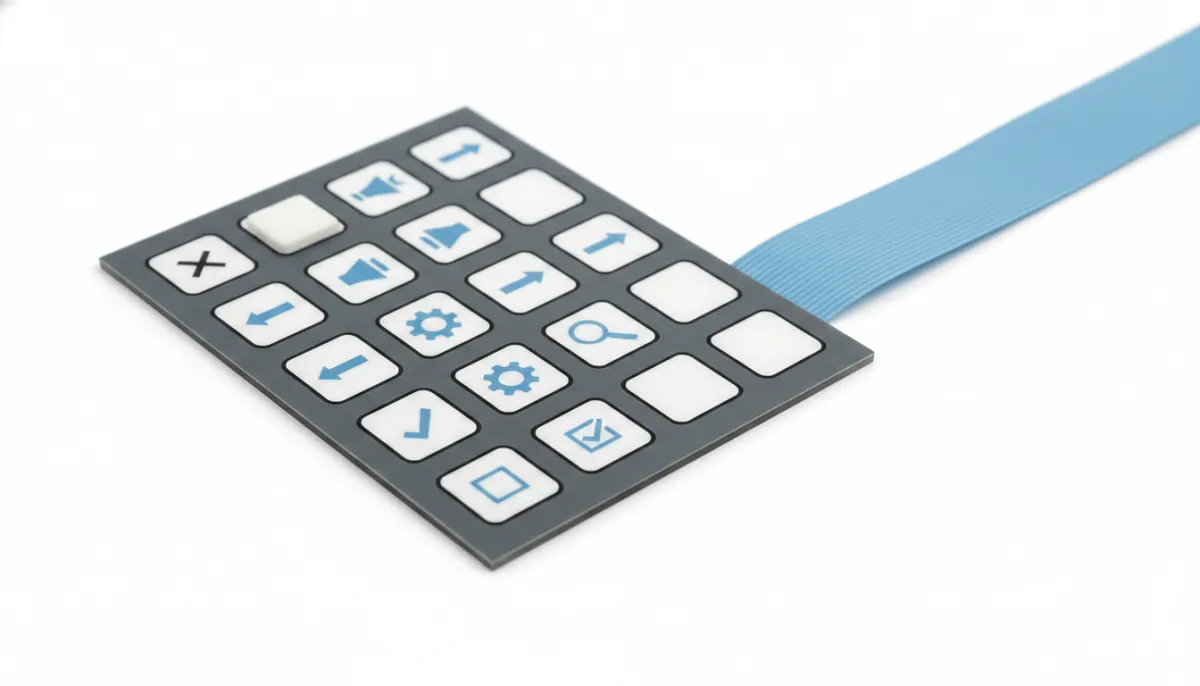
Explore essential tips for selecting the ideal membrane switch for your electronic devices.
What is a Membrane Switch?
A membrane switch is a type of thin, flexible button used to control electronic circuits. These switches are typically designed with elastic membranes and find applications in various fields. Membrane switches enhance the functionality of devices by providing user-friendly interfaces. In this article, we will explore five crucial factors to consider when selecting a membrane switch.1. Choose the Right Backlighting
The backlighting of membrane switches varies depending on the application. An inappropriate backlighting choice can negatively affect user experience.
- Electroluminescent (EL): Offers good illumination with low energy consumption.
- LED: Highly energy-efficient and long-lasting.
- Optical Fiber: Provides high-quality lighting but may be more expensive.
2. Consider Your Application
When selecting a membrane switch, you must take into account the operational environment of your device.
- Industrial Applications: Durability and water resistance may be essential.
- Consumer Electronics: Aesthetic appeal and user-friendly interfaces should be prioritized.
3. Tactile Feedback
Tactile feedback helps users perceive the effectiveness of the switch.
- Soft Touch: Provides gentle feedback to the user.
- Sharp Touch: Offers a more distinct response.
4. Select Color Schemes
Choosing the right colors can enhance the visibility of the membrane switch.
- High Contrast: Enables users to easily distinguish between keys.
- Aesthetic Colors: Complements the overall design of the device.
5. Flexible Membrane Selection
Flexible membranes affect the durability and longevity of the switch.
- Thickness: Thicker membranes are more durable but offer less flexibility.
- Material: Materials like polyurethane can provide better performance.
How It Works
Membrane switches operate on a simple principle to open and close electrical circuits. When a user presses the switch, the elastic membrane completes or breaks the circuit, determining which function of the device will activate. For instance, a membrane switch in a kitchen appliance allows the device to turn on or off by pressing a button.Pros and Cons
Pros:
- Space-saving due to its lightweight and slim design.
- Resistant to water and dust.
- Offers a wide range of color and design options.
- Can be sensitive to high temperatures.
- May show wear with prolonged use.
Frequently Asked Questions (FAQ)
1. Where are membrane switches used?
Membrane switches are utilized in a variety of areas, from home appliances to industrial machines, automotive, and medical devices.
2. What is the lifespan of membrane switches?
The lifespan varies with quality but generally ranges from 1 to 5 years.
3. Are membrane switches waterproof?
Yes, they can be made water-resistant with the right materials and design.
4. How are membrane switches cleaned?
They can be cleaned with a soft cloth and a mild cleaning solution.
5. Can membrane switches be customized?
Yes, they can be customized with different colors and design options.