
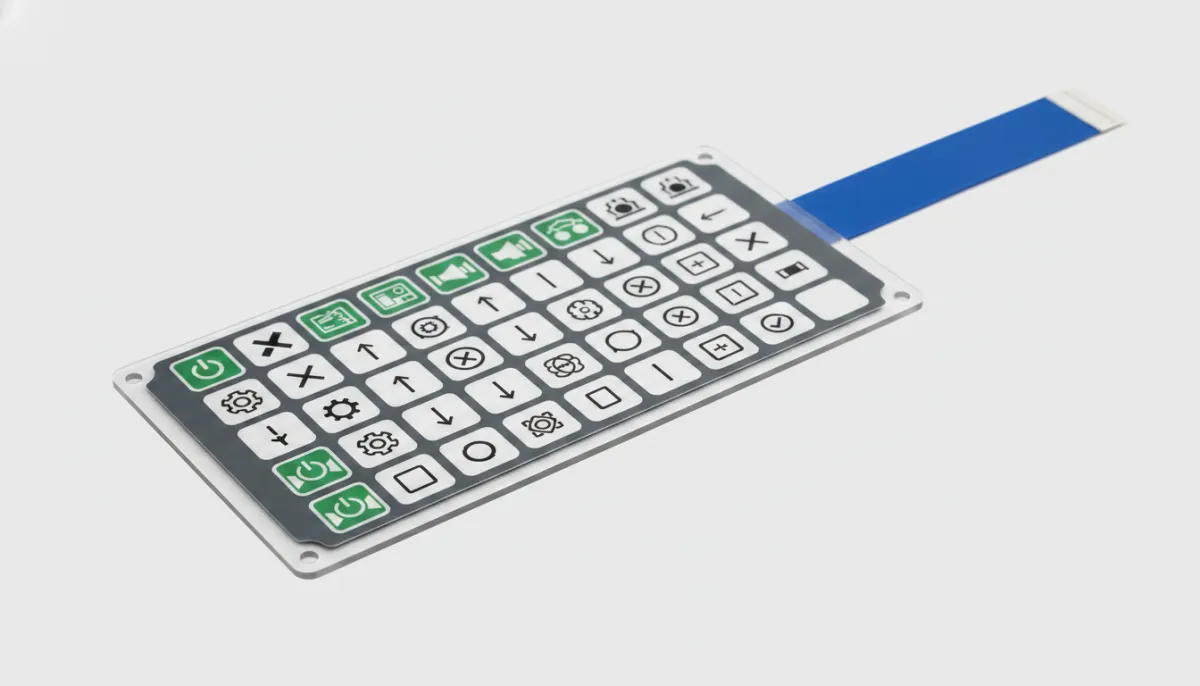
Discover various adhesive types for membrane switch panels and their features, enhancing durability and application suitability.
Exploring Adhesive Types for Membrane Switch Panels
Membrane switch panels are vital components in contemporary electronic devices, often enhanced with an adhesive layer on their backs to ensure proper installation. This adhesive not only boosts the durability of the panel but also prolongs its lifespan. In this article, we will delve into the commonly used adhesive types for membrane switch panels and their unique characteristics.
How Adhesives Work
Adhesives create a robust bond between the membrane switch panels and the surfaces they are applied to. Typically, these adhesives are formulated using specialized compounds to forge a strong connection between two surfaces. Below are some prevalent adhesive types along with their attributes:
Types of Adhesives
1. 3M55236
3M55236 is renowned for its high-temperature resistance and is frequently favored in industrial applications.
- Advantages: Superior temperature tolerance, longevity, excellent adhesion
- Disadvantages: Higher cost, may require special applications
2. 3M467MP
This versatile adhesive can be applied to a variety of surfaces and offers an aesthetically pleasing transparent appearance.
- Advantages: Easy to apply, strong adhesion across various surfaces
- Disadvantages: Low temperature resistance, limited lifespan
3. Avery Dennison FT 300
Avery Dennison FT 300 is recognized for its exceptional bonding strength and is typically selected for challenging environmental conditions.
- Advantages: Resilience to temperature and humidity, strong adhesion
- Disadvantages: Limited flexibility, application can be challenging
Application Scenarios
Membrane switch panels find utility in various industrial and commercial settings. Here are a few scenarios:
- Industrial Control Panels: Used in machinery control systems to enable easy interaction for operators.
- Medical Devices: In medical devices, adhesives that ensure hygiene securely attach to the device's surface.
- Consumer Electronics: Employed in consumer products like smartphones and tablets to create user interfaces.
Pros and Cons
The advantages and disadvantages of adhesive types for membrane switch panels include:
- Pros:
- Durability: High-quality adhesives ensure the long-term functionality of membrane switch panels.
- Aesthetics: Transparent and thin adhesive layers enhance functionality without compromising visual appeal.
- Cons:
- Cost: Quality adhesives tend to be more expensive.
- Application Difficulty: Some adhesive types may yield undesirable results if not applied correctly.
Frequently Asked Questions (FAQs)
- How is adhesive durability tested?
- Where can membrane switch panels be applied?
- What factors should be considered when selecting an adhesive?
The durability of adhesives is assessed through various temperature and humidity tests. Manufacturers conduct tests according to specific standards to ensure product performance.
These panels can be utilized across multiple sectors, from industrial machinery to medical devices, and from consumer products to automotive applications.
When choosing an adhesive, consider the application environment, temperature resistance, surface compatibility, and cost factors.