
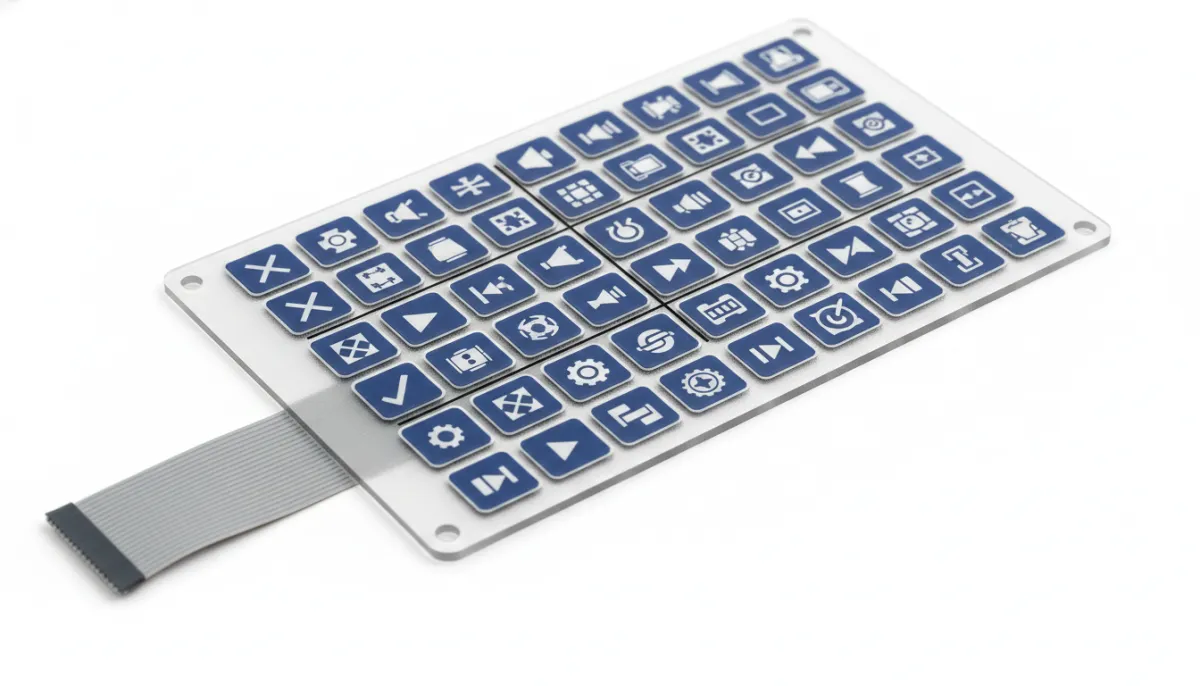
Discover the role of conductive ink in membrane switches and its impact on technology. Learn about its advantages, applications, and more.
Understanding Membrane Switches and Conductive Inks
Conductive ink is a paste that can be printed and features a unique viscosity. It is a composite material made up of fillers, binders, solvents, and additives, playing a vital role in applications like membrane switches.
This article delves into the composition of conductive ink, its functionality, and its pros and cons in the realm of pressure-sensitive adhesives.
What is Conductive Ink?Conductive ink is specifically formulated to facilitate electrical conductivity. Its typical components include:
- Binders: The primary element of the ink, responsible for dispersing pigments and ensuring adhesion to surfaces.
- Fillers: White or transparent powder substances used in place of pigments to reduce production costs.
- Solvents: Employed to adjust the viscosity of the ink.
- Additives: Substances added to enhance the performance of the ink.
Conductive ink is utilized to create electrical circuits on membrane switches. Here are some scenarios where it is applied:
- Industrial Equipment: Found in control panels of machinery.
- Home Appliances: Commonly used in electronic kitchen devices, smartphones, and other gadgets.
- Automotive Sector: Implemented in in-vehicle control systems.
Benefits:
- Flexibility: Allows application on various surfaces and shapes.
- Cost-Effectiveness: Costs can be lowered by using fillers.
- Ease of Application: Can be applied quickly and efficiently.
Drawbacks:
- Durability: Some conductive inks may be susceptible to wear over time.
- Performance Variability: Conductivity can vary depending on the binders used.
- Drying Time: Certain inks may have prolonged drying times.
- Where is conductive ink used? It is frequently utilized in industrial devices, home appliances, and the automotive industry.
- How can conductivity be improved in conductive ink? Conductivity can be enhanced by using different binders and fillers.
- How durable is conductive ink? Durability varies based on the components used.
Conductive ink emerged in the late 20th century for integrating electronic circuits with printed circuit boards (PCBs). This technology has revolutionized the industry and consumer markets by enabling the creation of user-friendly interfaces. Today, conductive ink technology is applied across a wide spectrum, from smart devices to automotive systems, resulting in lighter, thinner, and more flexible products.