
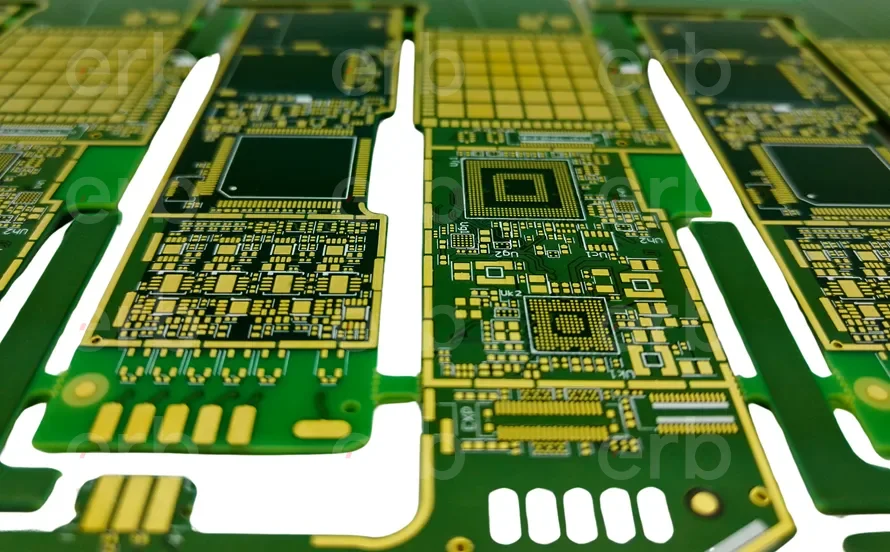
Exploring the Essentials of PCB Prototype Technology - Detaylı inceleme ve analiz.
What Are PCB Prototypes?
Printed circuit boards (PCBs) are created using insulating substrates coated with conductive laminated copper sheets. The copper serves as the fundamental material for constructing paths that connect electronic components, while the insulating substrate stabilizes the entire device. PCBs are built to be durable and can withstand a specific amount of physical processing. They are central to many technological products, including computers, due to their ability to support a wide range of electronic components and configurations.
The Significance of PCB Prototyping
PCBs manage complex systems, necessitating careful construction and testing. Producing a PCB prototype involves creating a model that can be tested to identify design, mechanical, and electrical errors. While PCB prototypes are used for testing, their manufacturing methods, intended purposes, and materials used can vary.
The Prototyping Process and Applications
Plastic PCB Prototyping Techniques
Many industrial manufacturers incorporate prototyping machines into their production lines. However, before integrating a prototyping machine, it’s essential to analyze the process and determine which type of material is most suitable for the application. Various materials and processes are available for PCB prototyping, with plastic being a frequently chosen option due to its ease of cutting and processing.
When utilizing plastic, the prototyping process can implement rapid prototyping techniques. These methods create individual parts based on a computer-generated model and then combine each piece layer by layer to produce the final component. Common techniques include stereolithography, additive manufacturing, laser sintering, and 3D printing.
- Stereolithography: This approach involves layer-by-layer solidification of a liquid resin to form three-dimensional objects.
- Additive Manufacturing: Objects are produced by heating thermoplastic filaments and combining them in layers.
- Laser Sintering: This technique creates objects by melting powdered materials with a laser and combining them layer by layer.
- 3D Printing: Used to produce physical objects from a digital model.
Pros and Cons
- Advantages:
- Rapid production time: Prototypes can be quickly generated.
- Customization: Allows for tailoring with various designs and materials.
- Low cost: Production costs are minimal for small-scale manufacturing.
- Disadvantages:
- Durability: Prototypes often lack the durability of the final product.
- Material limitations: Not all materials may be suitable for specific production methods.
- Performance testing: Errors in prototypes may not be as apparent as in final products.
- Why are PCB prototypes necessary? Prototypes are essential for identifying design flaws and testing the functionality of the product.
- What materials are used in PCB prototypes? Typically, plastics, ceramics, and metals are employed.
- What is the production time for prototypes? The production time can vary depending on the technology used, but it generally takes a few days.