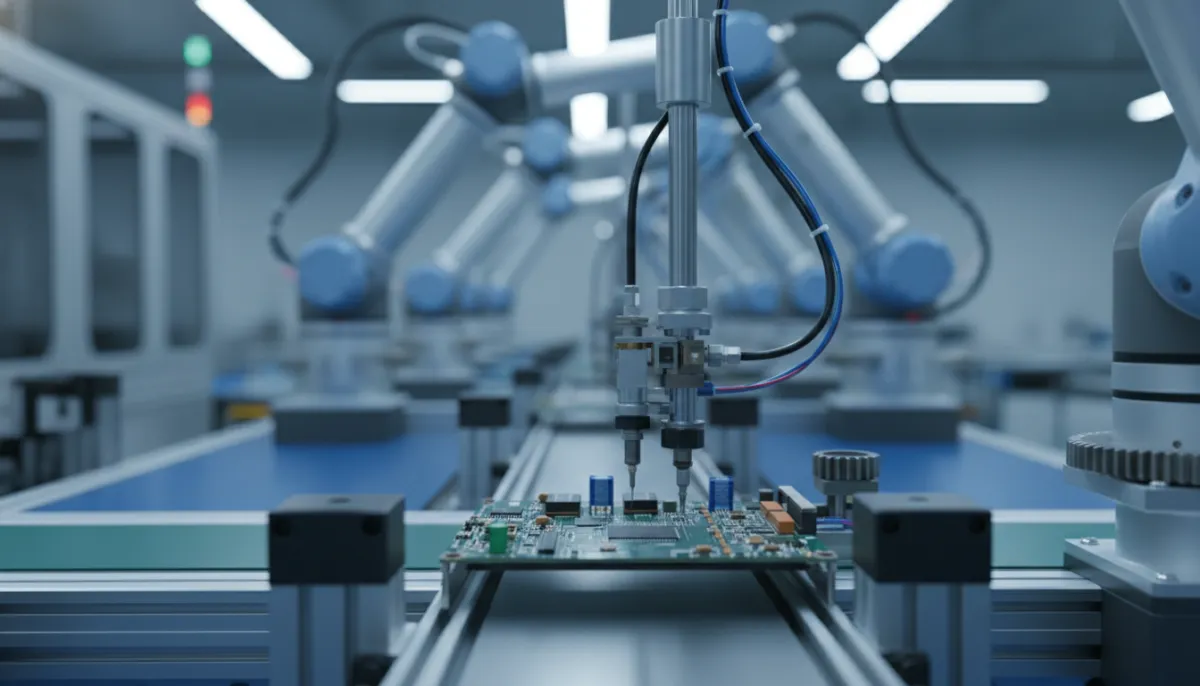
Discover the evolving trends in next-generation HMI technology and its impact on industrial automation efficiency.
Exploring the Future of HMI Technology in Industrial Automation
Human-Machine Interface (HMI) technology serves as a vital element in the realm of industrial automation. However, several existing products face limitations and challenges regarding their applicability. HMI is a term that encompasses electronic devices enabling operators to interact with automation systems. In this article, we will delve into the evolving trends of next-generation HMIs, their application scenarios, advantages, and drawbacks.Key Features of HMI and Its Functionality HMI empowers operators to control machines, monitor data, and understand system statuses. For instance, within a production line, operators can use HMI to:- Start or stop equipment.
- View alarm and event logs.
- Examine historical data and analyze trends.
These functionalities significantly enhance operators' ability to manage machinery more efficiently.Challenges Faced by Traditional HMIs The first-generation HMIs primarily focused on allowing users to start and stop equipment and understand how systems operated. Over time, features such as alarm and event logs, historical data, and graphical displays began to be integrated. Some of the challenges encountered by traditional HMIs include:- High costs: Adding new features can be expensive.
- Maintenance difficulties: Complex systems can complicate maintenance and repair tasks.
- Application limitations: HMIs may not be suitable for every automation system.
Advantages of Next-Generation HMIs Next-generation HMIs have been developed to address the shortcomings of traditional models. These new designs boast user-friendly interfaces, additional functionalities, and cutting-edge technologies. Notable advantages include:- Enhanced user interfaces: Modern graphics and more intuitive controls.
- Cost-effective reconfiguration: Reprogramming HMIs is often less expensive.
- Industrial edge applications: Providing greater durability and reliability.
Potential Drawbacks Nevertheless, next-generation HMIs also come with certain disadvantages:- High initial investment: New technologies can be costly upfront.
- Training requirements: Operators may need training to effectively use new systems.
- Software updates: They may require continuous updates.
Frequently Asked Questions (FAQ)1. What is HMI? HMI refers to electronic devices that facilitate operator interaction with automation systems.2. What are the advantages of next-generation HMIs? They offer more user-friendly interfaces, cost-effective reconfiguration, and enhanced durability in industrial applications.3. What are the drawbacks of using HMI? High initial costs, the need for training, and ongoing software update requirements are common issues.4. Where are HMIs used? HMIs are utilized in industrial automation, consumer electronics, and PC-based applications.Conclusion Next-generation HMIs play a crucial role in the future of industrial automation. With their user-friendly designs and advanced functionalities, they not only enhance business efficiency but also address the shortcomings of traditional HMIs.