
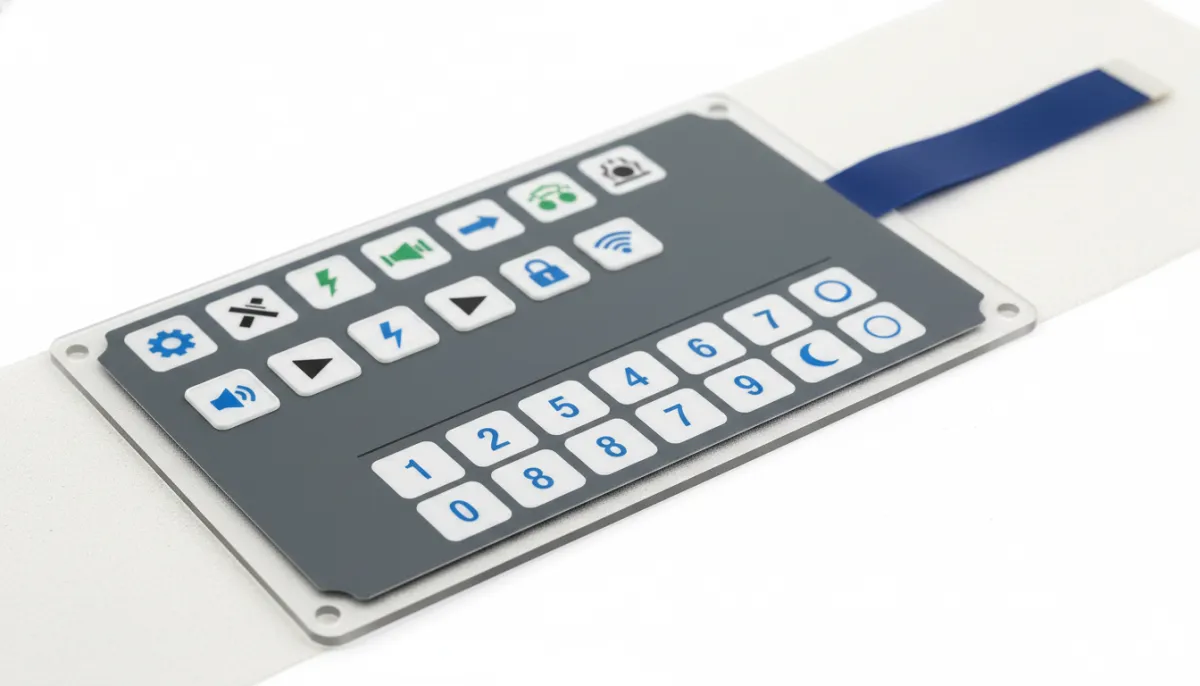
Discover the slim design and versatile applications of membrane switches and panels in modern technology.
The Slim Design and Applications of Membrane Panels
Membrane switches and panels have become essential components in contemporary electronics and industrial applications. However, there's often curiosity surrounding their thickness. Do you understand what it means for membrane panels to be thin and how they function? Thickness Range of Membrane PanelsTypically, membrane panels consist of two layers: a Lexan label and an adhesive backing. These layers work together to ensure the panel's functionality and aesthetic appeal.
The thickness of membrane panels is produced within a range of 0.22 mm to 1.17 mm.These thicknesses can be customized according to user requirements. The thinnest panel measures just 0.22 mm, comparable to the thickness of two A4 sheets of paper (with a single A4 sheet being approximately 0.1 mm thick).
How Does It Work?A membrane switch provides a straightforward yet effective method for interacting with a device's electronic circuit. Users can employ these switches in various scenarios:
- Industrial Control Panels: In machinery control and monitoring systems, membrane switches allow operators to issue commands quickly and reliably.
- Home Electronics: These switches are used in kitchen appliances, televisions, and other household devices to facilitate user control.
- Medical Devices: They offer a hygienic and durable solution for user interfaces in medical equipment.
Advantages:
- Lightweight: Thanks to their low thickness, membrane panels present a lightweight solution.
- Durability: They resist water, dust, and chemicals, making them suitable for various environments.
- Customizability: Designs and functionalities can be tailored to meet user demands.
Disadvantages:
- Low Mechanical Durability: They may be damaged if subjected to excessive physical pressure.
- Repair Difficulty: If damaged, they can be challenging to repair; often requiring replacement.
- Production Costs: Customized designs can be more expensive compared to standard products.
- What are membrane panels used for? They are utilized across various fields, including industrial control, home electronics, and medical devices.
- How thick is the thinnest membrane panel? The thinnest membrane panel has a thickness of 0.22 mm.
- How durable are membrane panels? They are resistant to water, dust, and chemicals but can be sensitive to extreme physical pressures.
- What customization options are available? Membrane panels can be customized in terms of graphic design and functionality.
Membrane switches and panels represent a technology that began evolving rapidly at the end of the 1980s. Initially expected to replace mechanical switches, their benefits led to widespread adoption in both industrial and personal devices. With advancing technology, manufacturing processes became more efficient, significantly enhancing the thickness, durability, and aesthetic appeal of membrane panels.
ConclusionMembrane switches and panels have become indispensable elements of modern technology. Their slim profiles and diverse applications make them crucial in both industrial and personal settings.