
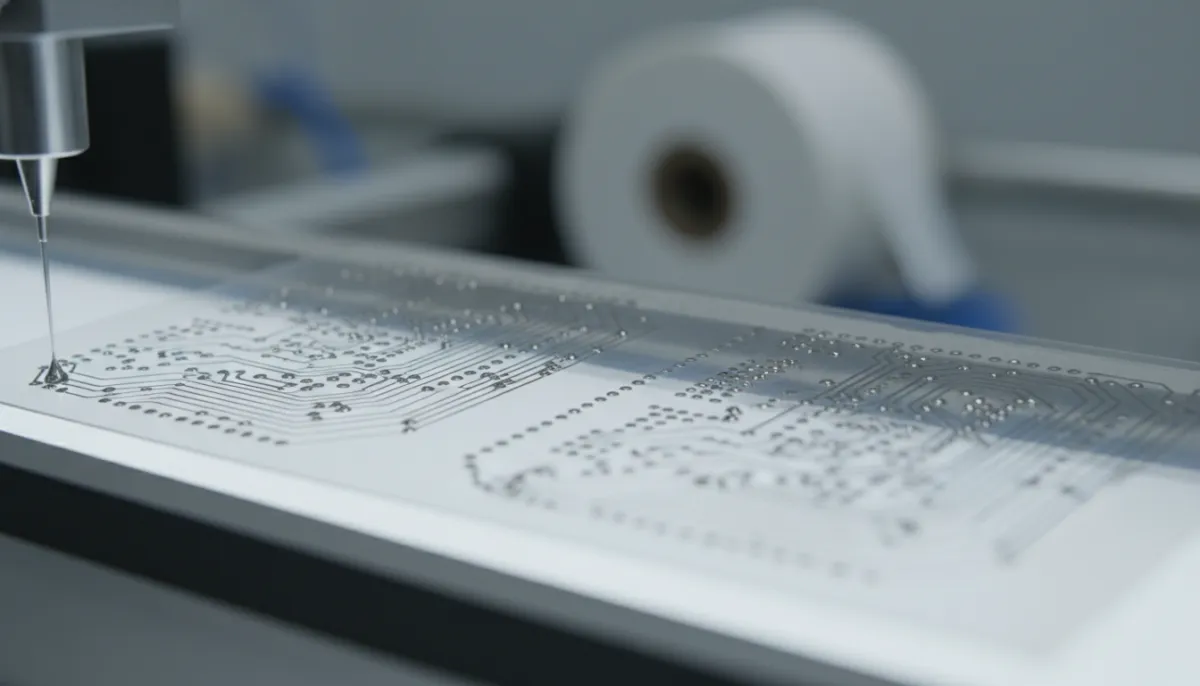
Discover the innovative world of conductive inks in printed electronics, their types, applications, and pros and cons.
Understanding Printed Electronics and Conductive Inks
Printed electronics is an innovative technology that has garnered significant interest for creating flexible electronic devices. This emerging field within additive manufacturing is characterized by unique technical features that offer substantial advantages in producing multifunctional electronic devices at low costs and over large areas. As a result, this technology enables diversification in the methods used to manufacture electronic devices.
Currently, printed electronics are widely utilized across various flexible electronic devices, including RFID tags, thin-film solar cells, flexible sensors, and transparent conductive films. In recent years, printing technologies that enable the patterning of electronic materials on different substrates have gained considerable attention. Contact printing methods such as gravure, offset, and flexographic printing are commonly employed, while non-contact techniques like screen printing and inkjet printing are also key choices in the production of flexible electronics.
The advancement of general printing technology, coupled with the growth of flexible electronic devices and packaging markets, indicates a rapid development opportunity for the printed electronics industry. The most critical functional material in this domain, conductive ink, is poised to enter a new research phase.
Types of Conductive Inks and Their Applications
Conductive inks are fundamental components in printed electronics applications. They come in various types, each with distinct properties and application areas. Here are some of the most common types of conductive inks:
- Silver Inks: Highly sought after due to their excellent conductivity, these inks are commonly used in RFID tags and flexible circuits.
- Carbon Inks: Offering a cost-effective option, these inks are frequently used in flexible sensors.
- Polymer Inks: Known for their flexibility and durability, they are often favored for transparent conductive films.
To better understand how these conductive inks function, let's explore a few use cases:
- RFID Tags: Silver inks provide high conductivity in the manufacturing of RFID tags, which are essential for product tracking and inventory management.
- Flexible Solar Cells: Carbon and polymer inks are utilized in solar cell production, resulting in lightweight and portable energy sources.
- Smart Packaging: Flexible sensors are integrated with circuits made from carbon inks to monitor the freshness of food products.
Advantages and Disadvantages of Conductive Inks:
- Advantages:
- Offers the potential for low-cost production.
- Provides flexible and lightweight structures.
- Adapts well to various application fields.
- Disadvantages:
- May not have a long lifespan.
- Can experience conductivity loss under certain conditions.
- May require precision in the manufacturing process.
- What are the main components of conductive inks? They typically consist of metal powders, polymers, and solvents.
- Which printing methods are most commonly used in printed electronics? Gravure, offset, flexographic, screen, and inkjet printing methods are utilized.