
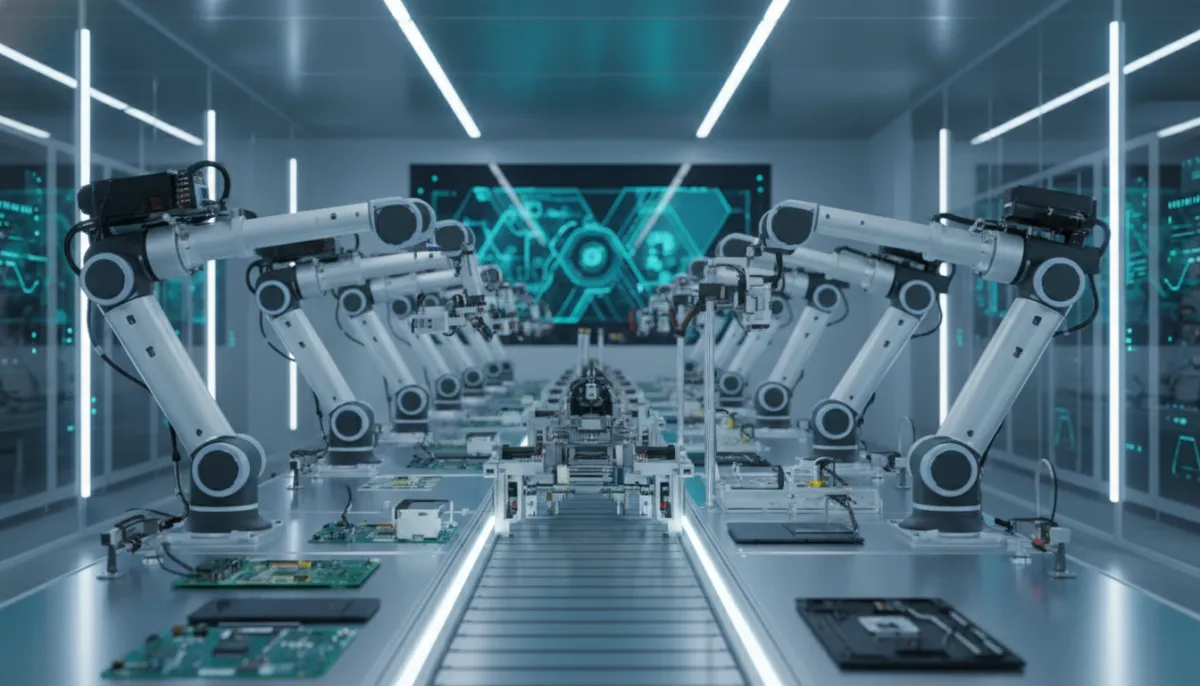
Explore how smart manufacturing and big data work together to enhance efficiency and reduce costs in today's industrial landscape.
Smart Manufacturing and Big Data: The Dawn of a New Era
The intersection of smart manufacturing and big data stands as a cornerstone of modern technology. The synergy between these two concepts is transforming production processes, boosting efficiency, and reducing costs. This article explores the relationship between smart manufacturing and big data, highlighting how they create value.Smart manufacturing refers to a system built on the automation of production processes and data analytics. It enables machines and robots to operate autonomously, minimizing human intervention. For instance, a factory manager can issue voice commands to robots to oversee specific production tasks. This ensures complete automation at every stage of manufacturing.
Big data on the internet encompasses data interactions among people, objects, and their interconnections. This information is continuously gathered and analyzed throughout a product's lifecycle. The ongoing evolution of big data significantly contributes to the innovative advancement of smart manufacturing processes.
The Impact of Big Data on Smart Manufacturing
Big data plays a pivotal role in accelerating the transformation of the manufacturing industry. Companies harness big data to make informed decisions, predict market trends, and respond swiftly to customer demands.- Data Analysis: Analyzing data throughout the production process allows for early identification of potential issues.
- Automation: Robots can automatically execute tasks by monitoring data flows.
- Customization: Production processes can be readily tailored to meet customer specifications.
- Data Security: The use of big data can pose threats to data security.
- High Costs: Advanced data analytics and automation systems may require substantial investments.
- Technical Limitations: Some businesses may struggle to implement these technologies effectively.
- Factory Automation: Robots perform specific tasks on the production line.
- Data-Driven Decision Making: Executives can make strategic decisions based on big data analysis.
- Product Development: Analyzing customer feedback can lead to the development of new products.
- What is big data? Big data refers to datasets that are too large or complex to be processed by traditional data processing software.
- What is smart manufacturing? Smart manufacturing is a system that improves production processes through automation and data analysis.
- How is big data utilized in manufacturing processes? It is used to optimize production processes, reduce costs, and enhance efficiency through data analysis.