
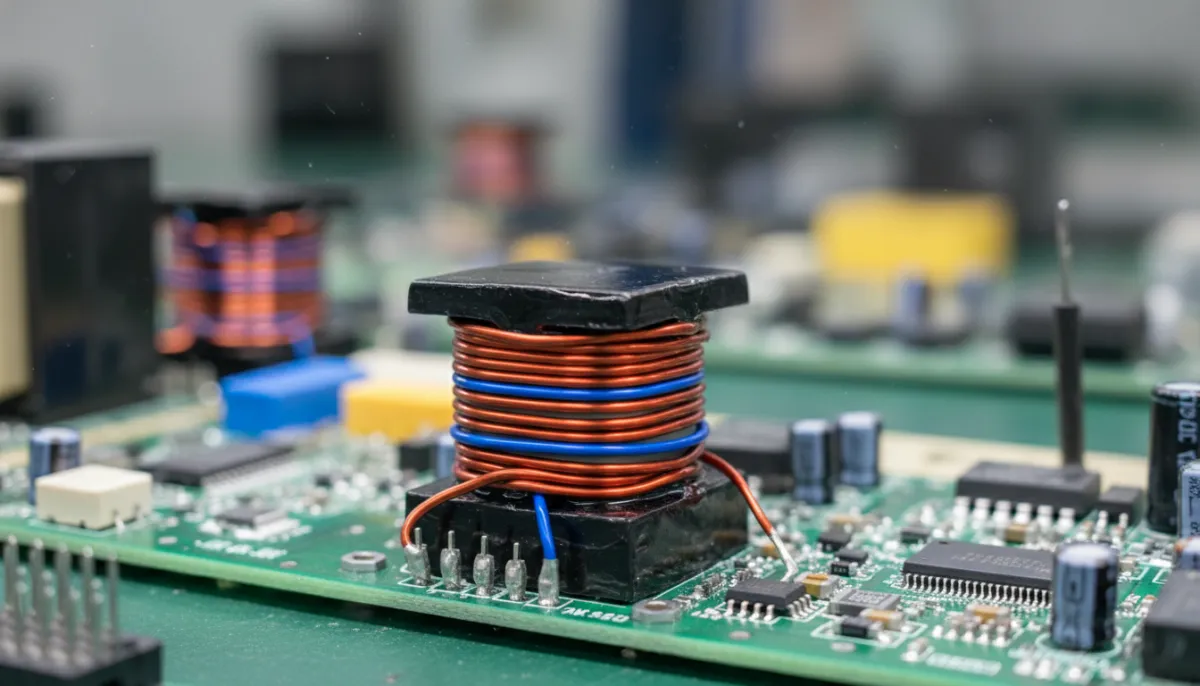
Discover the benefits and applications of high-frequency transformers, focusing on the efficient ER Series for modern technology.
What is a High-Frequency Transformer?
A high-frequency transformer is a device designed to convert electrical energy voltage, typically operating within a range of 20 kHz to several MHz. These transformers play a crucial role in sectors like consumer electronics, communication systems, and various industrial applications. Renowned for their compact and lightweight nature, high-frequency transformers offer advantages over traditional models, making them ideal for smaller devices.The ER Series of high-frequency transformers boasts an efficient and compact design, suitable for a wide array of applications.Technical Specifications:
- Input Voltage: 85V ~ 265V/AC, 50/60Hz
- Output Voltage: 3.3V ~ 36V/AC, 50/60Hz
- Maximum Power: 1000W
- Compliance with UL, VDE, 3C, CQC, RoHS, and REACH
- High operational frequency
- Exceptional efficiency
- Compact size
- Lightweight construction
- Consumer Electronics
- Communication Systems
- Industrial Applications
Operating Principle of High-Frequency Transformers
High-frequency transformers function based on the principle of electromagnetic induction. This principle allows for the generation of electric current when a conductor moves within a magnetic field or when the magnetic field changes around a conductor. Typically made with ferrite cores, these transformers minimize magnetic losses and enable operation at higher frequencies.Usage Scenarios:- Consumer Electronics: High-frequency transformers are used as power supplies in televisions, computers, and other electronic devices.
- Communication Systems: In devices like radio transmitters and receivers, they play a vital role in signal amplification and voltage conversion.
- Industrial Applications: They meet the requirements for high efficiency and compact size in robotic systems and automation equipment.
- High efficiency and minimal energy loss.
- Space-saving design due to their small size and lightweight nature.
- Wide application range due to compliance with various standards.
- High-frequency transformers may experience efficiency losses when operated outside their designated frequency limits.
- They may require more complex circuit designs, potentially increasing costs.
- What are the benefits of high-frequency transformers? They offer advantages such as high efficiency, compact size, and lightweight construction.
- Which standards do these transformers comply with? They meet standards including UL, VDE, 3C, CQC, RoHS, and REACH.
- What are their applications? They have a broad range of applications, primarily in consumer electronics, communication systems, and industrial uses.