
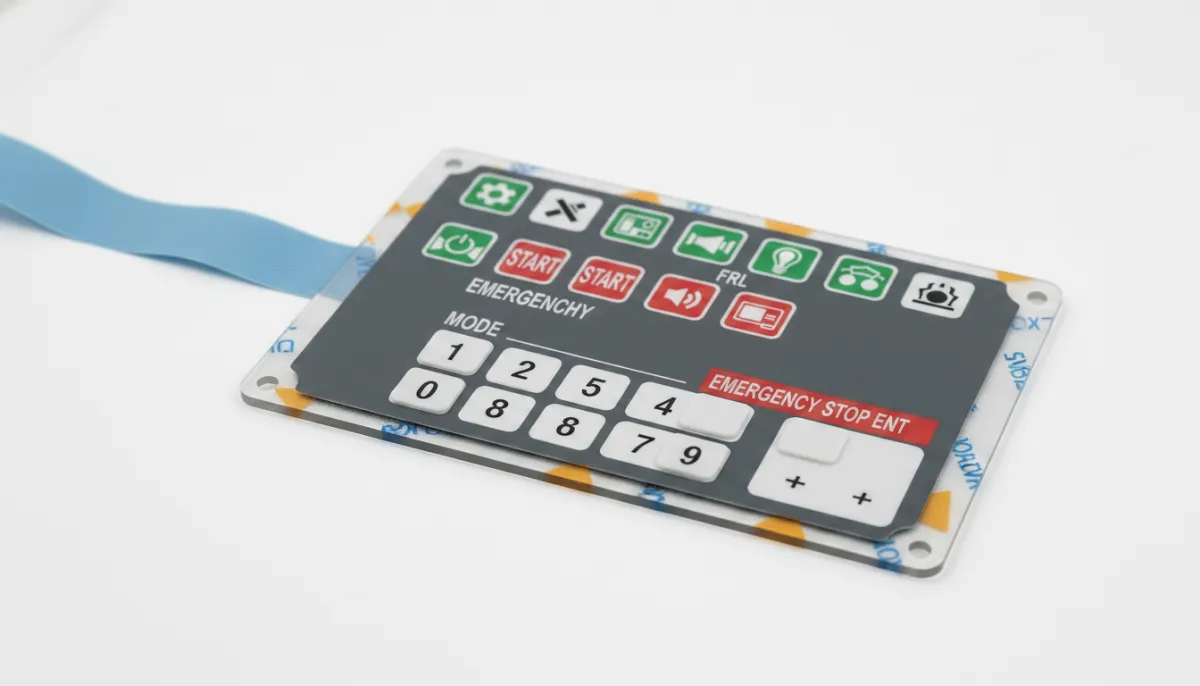
Explore the challenges faced by membrane switch manufacturers in a world dominated by touch screens and modern interfaces.
Navigating the Shift: Challenges for Membrane Switch Manufacturers in a Post-Keyboard Era
Membrane switches play a crucial role in controlling electronic devices, and they are undergoing significant transformations with the rise of touch screens in recent years. As technology advances, traditional input methods like keyboards and mice are being replaced by more modern, user-friendly interfaces. This shift is creating both challenges and opportunities for manufacturers of membrane switches.
Technical Overview:
- Structure of Membrane Switches: Typically, membrane switches consist of several layers. The top layer features graphics that represent the keys to be pressed by users. The bottom layer is made from materials that provide electrical conductivity. Between these two layers lies a conductive layer that creates an electrical connection when the keys are pressed.
- Operating Principle: When a user presses a key, the conductive layer beneath the graphics on the top layer makes contact. This contact generates an electrical signal, prompting the connected device to execute a command.
Usage Scenarios:
- Industrial Equipment: Membrane switches are commonly used as control panels in industrial machinery. Alongside touch screens, physical buttons help users control machines more safely and efficiently.
- Consumer Electronics: In smartphones, tablets, and other portable devices, membrane switches enhance user interaction.
- Gaming Controllers: Game consoles and controllers may utilize membrane switches to enrich the gaming experience.
Pros and Cons:
Advantages:
- Durability: Membrane switches tend to be more durable than physical buttons due to having fewer moving parts.
- Water Resistance: When designed correctly, membrane switches are resistant to water and dust.
- Aesthetic Design: They allow for graphic design possibilities, enabling the creation of visually appealing interfaces.
Disadvantages:
- Sensitivity Issues: Users may sometimes find the tactile feedback of membrane switches lacking.
- Wear Over Time: With continuous use, membrane switches can wear out and lose functionality.
Frequently Asked Questions (FAQs):
- Why are membrane switches preferred? Their advantages, such as durability, water resistance, and aesthetic design, make membrane switches a popular choice.
- How long do membrane switches last? Depending on quality and usage conditions, membrane switches can last for many years.
- Which is better, membrane switches or touch screens? While touch screens offer a more modern user experience, membrane switches are more durable and essential for certain industrial applications.
The Technological Background:
As technology evolved, keyboards were the primary input method during the era of desktop computers two decades ago. With the rise of laptops, input methods began to diversify. Today, tablets and touch screens have completely transformed the user experience. This evolution has affected the use of keyboards and membrane switches, necessitating manufacturers to develop new strategies.
In conclusion, membrane switches are undergoing a significant transformation alongside the evolution of technology.