
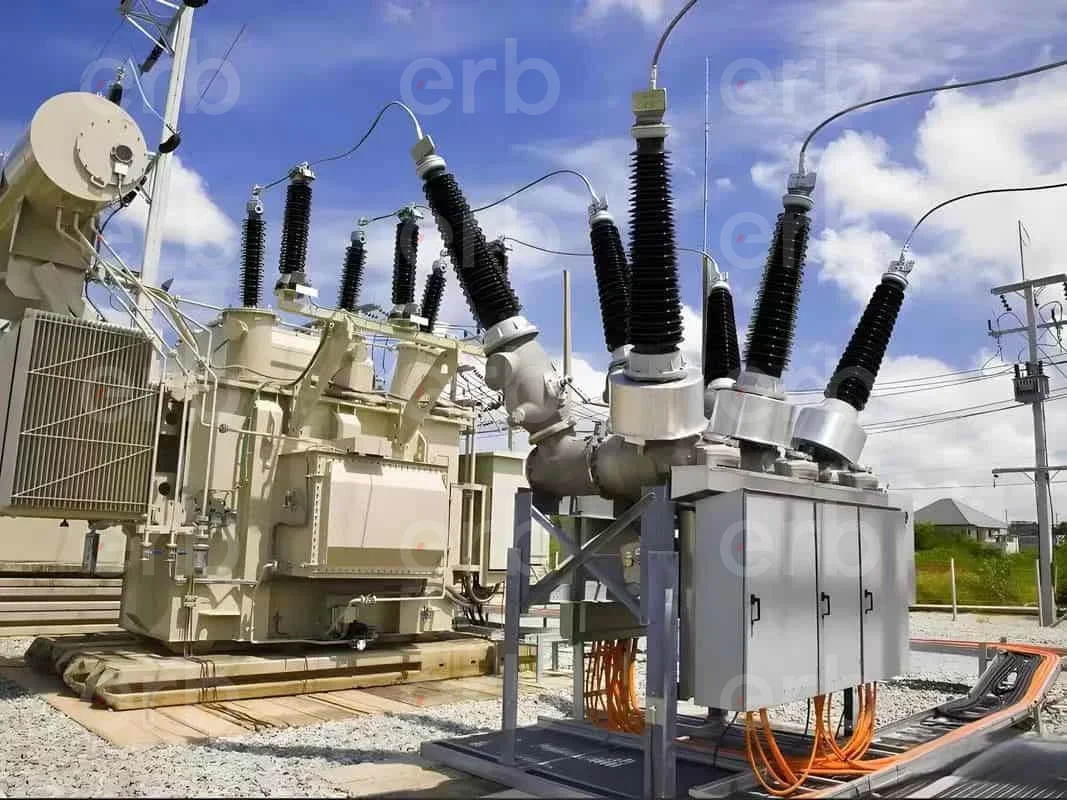
Explore the vital role of power transformers in energy systems, their advantages, and key considerations for efficient electrical energy management.
The Significance and Functionality of Power Transformers
Power transformers play a vital role in energy facilities and substations. Their primary functions involve stepping up voltage for electricity transmission and stepping down voltage for end-user consumption. In this article, we will explore how power transformers operate, their applications, and the advantages and disadvantages associated with them.
Transformers consist of two or more coils wound around a common iron core. These coils interact through alternating magnetic fields and operate based on the principle of electromagnetic induction. During the transmission of electrical energy, voltage and power losses are inevitable. When the same power is transmitted, the voltage loss is inversely proportional to the voltage; power loss is inversely proportional to the square of the voltage. Therefore, transformers are employed to increase voltage and mitigate transmission losses.
Application Scenarios
Power transformers are utilized in various scenarios:
- Energy Plants: The electricity generated at energy plants is stepped up in voltage as it is transmitted to distant cities and industrial areas.
- City Substations: High-voltage electricity is reduced before it reaches residential areas.
- Industrial Uses: Specialized transformers are implemented to supply energy in factories and large facilities.
- Renewable Energy Systems: In solar and wind energy systems, they play a crucial role in integrating generated energy into the grid.
These scenarios highlight the importance of power transformers in the safe and efficient transmission of electrical energy.
Advantages:
- Energy Efficiency: Voltage boosting reduces transmission losses.
- Flexibility: They can be produced in various capacities to meet diverse power needs.
- Reliability: They provide long-lasting and dependable energy transmission.
Disadvantages:
- High Initial Costs: Installation expenses can be quite significant.
- Maintenance Requirements: Regular maintenance is necessary; otherwise, performance may decline.
- Reactive Power Demand: High reactive power requirements can place additional strain on energy systems.
- What is the main function of transformers? They increase or decrease voltage and transmit electrical energy.
- How is the maintenance of power transformers carried out? They should be regularly inspected, and necessary repairs should be made promptly.
- What is the lifespan of transformers? They typically last between 20 to 30 years, though this can vary based on maintenance and usage conditions.
- What should be considered when selecting a transformer? Required capacity, operating conditions, and the local electrical grid should be taken into account.
In conclusion, power transformers are critical components that form the backbone of energy systems. Their ability to manage voltage enhances overall system efficiency by reducing energy losses. However, their high costs and maintenance requirements are factors that warrant careful consideration. ’s power transformers stand out with their innovative solutions in this field.