
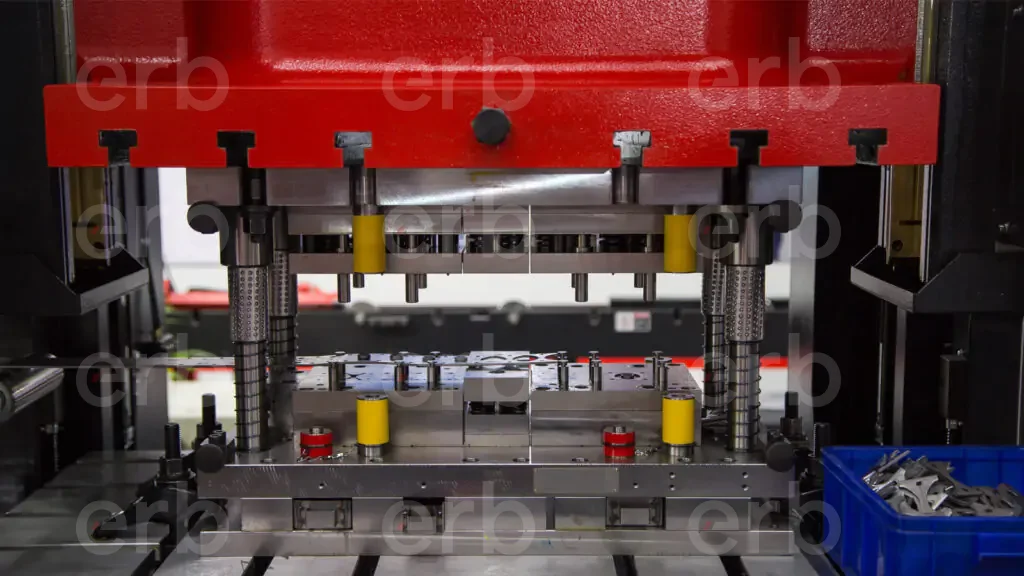
Explore the intricate world of precision sheet metal processing, including its key processes and industry applications.
Precision Sheet Metal Processing: An Overview
The realm of precision sheet metal processing encompasses a variety of intricate operations. In addition to fundamental tasks such as cutting, templating, and bending, advanced services like laser cutting, screen printing, and assembly are also provided.
This article will explore the core processes utilized by in sheet metal processing.
- 1. Material Application: Based on client specifications, engineers calculate the dimensions and types of raw materials required. They then request these materials for production.
- 2. Templating: Engineers design according to customer drawings, breaking down and enlarging the graphics of the parts. Cutting machines are employed to obtain materials of the right size and thickness. For bulk orders, a custom cutting die is created.
- 3. Drilling/Cutting Process: Workers operate CNC drilling/cutting machines to process the raw materials. During this step, NC (Numerical Control) codes must be created for the processed parts.
How It Works
Precision sheet metal processing is typically based on specific product or component designs. For instance, if sheet metal is being processed for the outer casing of an industrial device, engineers first develop the product design. This design serves as the starting point for the necessary dimensions and shapes in the production process. Subsequently, material requests are made based on this design, leading to the processing phase.
Every step of the process demands high precision and quality.
- Material Selection: Choosing the right material impacts the durability and performance of the product.
- Cutting and Templating: At this stage, materials are cut to the correct dimensions.
- Assembly and Inspection: In the final stage, the processed parts are assembled and subjected to quality control processes.
- Pros:
- High Precision: CNC machines ensure parts are produced to exact measurements.
- Flexibility: The ability to adapt to various design and material requirements.
- Efficiency: Automation reduces production times.
- Cons:
- High Initial Costs: CNC machines and other technological equipment can be expensive.
- Learning Curve: Workers and engineers may take time to master the technology.
- Material Waste: Cutting processes can sometimes result in wasted material.
- What is precision sheet metal processing?
Precision sheet metal processing involves shaping metal sheets through cutting, bending, and drilling operations. - In which industries is this process utilized?
It is employed across automotive, electronics, construction, and many other industries. - What machines are used?
CNC cutting machines, laser cutting machines, and drilling machines are commonly used. - How is quality control conducted?
Throughout each stage of the production process, parts are inspected for size and shape. - What materials are used?
Steel, aluminum, brass, and other metal alloys are commonly preferred.
Precision sheet metal processing plays a critical role in today's industrial applications. Its ability to offer both high precision and flexibility makes this technology highly favored. However, factors such as initial costs and the learning curve must also be considered.