
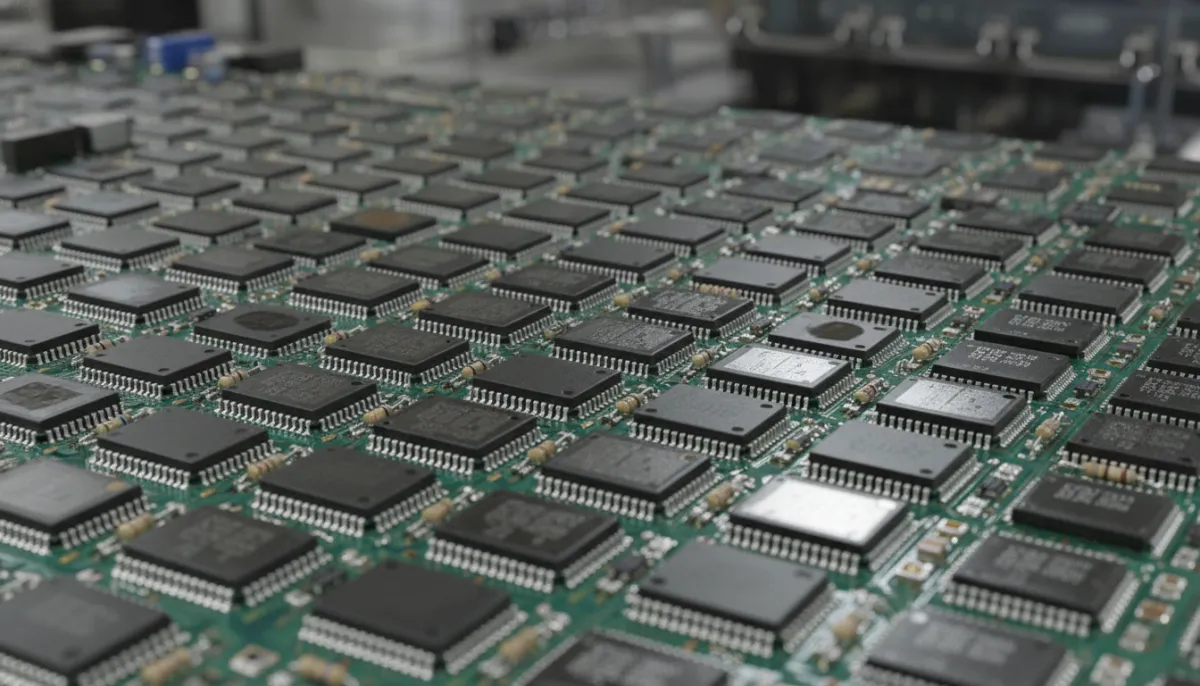
Explore the functionalities, classifications, and applications of coils in electronics. Understand their importance and how to choose the right one.
Understanding Coils: Functionality and Operation
Coils are crucial electronic components extensively utilized in electrical products, instrumentation, and various equipment. Their fundamental principle lies in harnessing the magnetic effects of electric current for energy storage. Due to these characteristics, coils play a vital role in numerous applications.
The operation of coils is based on Faraday's law of induction. When electric current flows through a coil, it generates a magnetic field around it. This magnetic field allows the coil to store energy and produce voltage as the current fluctuates. This feature makes coils ideal for filtering or regulating AC (alternating current) signals.
Applications of Coils
Coils are employed in various scenarios. Here are some notable examples:
- Filtering: Coils are effectively used to filter out high-frequency noise. For instance, coils can be preferred in speaker systems to block high-frequency signals.
- Energy Storage: Coils serve the purpose of storing electrical energy, especially significant in power supplies.
- Oscillator Circuits: Coils are utilized in oscillator circuits to generate signals at specific frequencies.
- Transformers: Coils are integral components of transformers, playing a crucial role in voltage conversion.
These scenarios illustrate the diverse and essential nature of coils as components in various applications.
Methods of Classifying CoilsCoils can be classified based on several criteria:
- Material: Coils can be constructed from various materials such as ferrite, metal, or aluminum.
- Connection Type: Coils can be categorized as surface mount (SMD) or through-hole types.
- Function: Coils may serve different purposes, including power coils, signal coils, and filter coils.
Each classification method varies according to the specific applications in which coils are utilized.
Pros and ConsThe advantages and disadvantages of coils can vary depending on specific applications. Here are some key points:
- Advantages:
- High energy storage capacity.
- Effective filtering for AC signals.
- Diverse range of applications.
- Disadvantages:
- Losses may occur at low frequencies.
- Physical size can pose challenges in certain applications.
- They may be expensive in some cases.
Here are some common queries regarding coils:
- Why are coils used?
Coils are used for energy storage, signal filtering, and various functions in electrical circuits. - What is the lifespan of coils?
The lifespan of coils depends on usage conditions, but they are generally long-lasting. - How are coils selected?
When selecting coils, factors such as material, size, and resistance should be considered based on the application requirements.
In conclusion, coils are indispensable parts of electronic circuits. With various classification methods and application scenarios, they can play significant roles in different uses. Given their advantages and disadvantages, coils can deliver excellent performance when chosen correctly.