
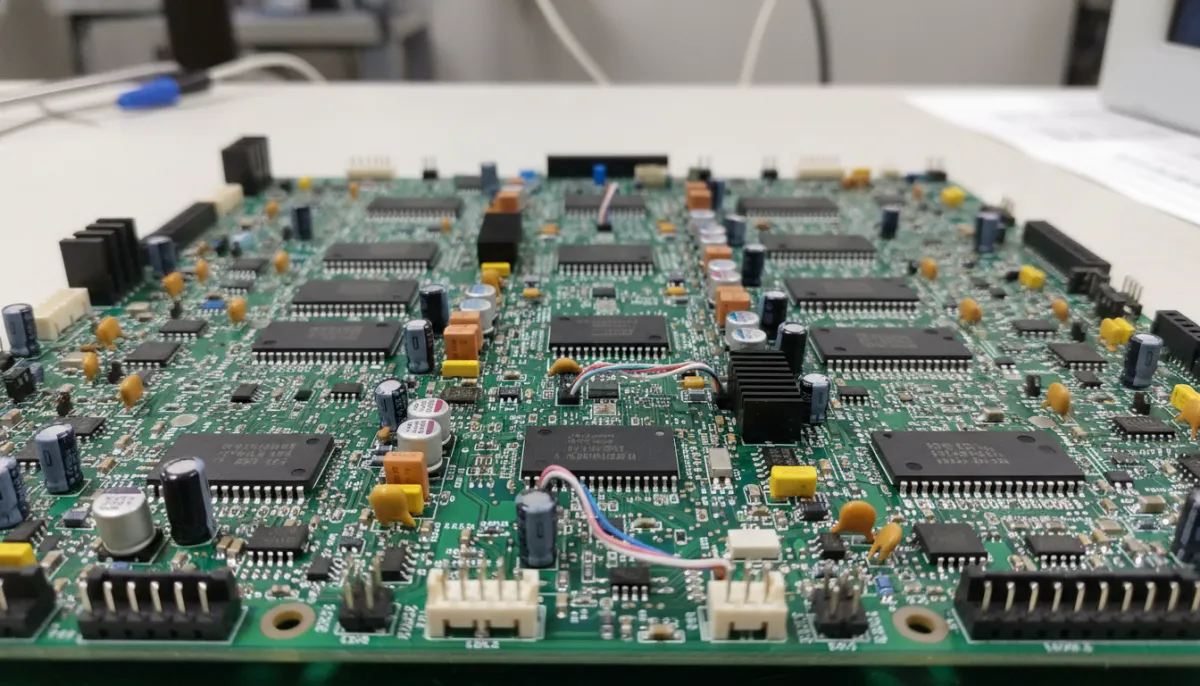
Discover the critical role of conformal coating in PCB assemblies for enhanced protection and durability in electronics.
What is Conformal Coating in PCB Assemblies?
PCB assembly, which stands for Printed Circuit Board Assembly, is a structure where electronic components are integrated. The reliability of these assemblies significantly correlates with their exposure to environmental factors. Therefore, conformal coating technology plays a vital role in safeguarding PCBs.
Conformal coating is a thin protective layer applied to the surface of a circuit board. This layer serves to shield the components on the PCB (Printed Circuit Board) from various harmful elements. Typically made from materials like acrylic, silicone, or polyurethane, this coating effectively prevents water, moisture, dust, and other damaging substances from reaching the circuit board.
How Does Conformal Coating Work?
The application of conformal coating generally follows these steps:
- Cleaning: The PCB must be cleaned before application to enhance adhesion.
- Material Selection: The appropriate coating material is chosen based on the application area and requirements.
- Application: The coating can be applied using brush, spray, or dip techniques, each offering different advantages.
- Drying: After application, the coating needs to dry for a specified period.
This process ensures that conformal coating is effectively applied, extending the life of the PCB.
Pros and Cons- Advantages:
- Protection: Offers excellent defense against external factors like water, moisture, and salt spray.
- Durability: Prolongs the lifespan of electronic components and reduces failures.
- High Density: Ideal for small and compact circuit boards.
- Disadvantages:
- Cost: The coating process may incur additional costs.
- Application Difficulty: Requires technical knowledge and experience.
- Automotive Electronics: Essential for circuits operating in high temperature and humidity conditions.
- Military Electronics: Ensures reliability in challenging environmental conditions.
- Aerospace: Critical for long-term durability and safety.
- Medical Electronics: Plays a significant role in protecting sensitive devices.
- How durable is conformal coating?
The lifespan of the coating can last several years depending on the material used, although this may vary under specific conditions. - Where is the coating process applied?
It is utilized in numerous fields, including automotive, military, aerospace, medical, and consumer electronics. - What should be considered during the conformal coating process?
Key factors include cleanliness, proper material selection, and the correct application method.
Conformal coating is widely used across various industries. Here are some common scenarios:
Conformal coating has been in use for protecting electronic circuits since the 1960s. Initially limited to simple coatings, this technology has evolved to meet the needs of high-tech applications today. With the rise of electric vehicles and drones, the use of conformal coating has surged, significantly enhancing the reliability and durability of electronic components.
In conclusion, conformal coating plays a crucial role in protecting modern electronic devices. This technology has become an industry standard due to its cost-effectiveness and reliability.