
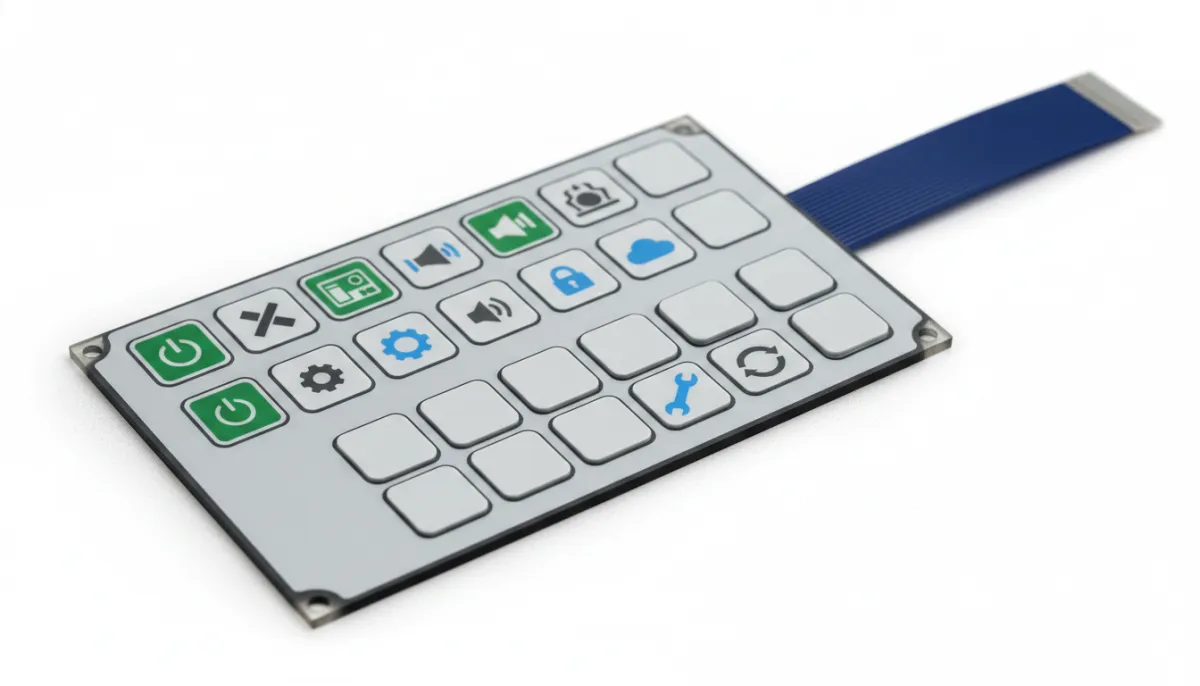
Discover the significance of one-stop membrane switch production in today's industries, highlighting speed, cost-effectiveness, and quality.
The Essential Role of One-Stop Membrane Switch Production in Modern Industries
One-stop membrane switch production has become an indispensable service for numerous equipment manufacturers and solution providers today. Many of these companies lack an efficient supply chain system, engineering capabilities, and purchasing teams, creating a demand for a manufacturer that can offer a suite of services including design, production, assembly testing, and qualification certification.
A company that meets these needs provides comprehensive one-stop membrane switch production services.
What advantages does the one-stop service model offer compared to traditional industrial production? More specifically, what are the unique benefits of our services compared to other manufacturers?
Benefits of One-Stop Services
- Speed and Efficiency: The one-stop service consolidates the entire production process under one roof, minimizing delays and allowing products to reach the market faster.
- Customized Solutions: Every business has unique needs. One-stop services deliver tailored solutions that cater to specific client requirements.
- Cost-Effectiveness: Collaborating with a single manufacturer reduces costs compared to working with multiple suppliers. A unified pricing structure enhances cost management.
- Quality Control: When one manufacturer oversees all processes, it simplifies quality control, leading to higher product quality.
- Technical Support: One-stop services provide technical assistance right from the design phase, contributing to the success of projects.
How Does the One-Stop Membrane Switch Production Process Work?
The one-stop membrane switch production process consists of several stages:
- Design: Customized designs are created based on client needs, executed by graphic designers and engineers.
- Production: Once the design is approved, the manufacturing process begins using high-quality materials.
- Assembly: The produced components are assembled to create the final product, carried out by skilled technicians.
- Testing: The product undergoes quality control tests, and any identified issues are addressed.
- Certification: The product is certified and prepared for market readiness.
Pros and Cons
Pros
- Quick turnaround times.
- Customized design options.
- Working with fewer suppliers.
- High quality and reliability.
- Technical support and consulting services.
Cons
- Initial costs may be higher.
- Risk of dependency on a single supplier.
- Additional time may be needed for customized solutions.
Frequently Asked Questions (FAQ)
- What is a one-stop service? A one-stop service manages all processes like design, production, assembly testing, and certification through a single manufacturer.
- What are the advantages of one-stop services? They offer numerous benefits such as speed, cost-effectiveness, customized solutions, and quality support.
- What unique advantages do you provide compared to other manufacturers? We stand out with customer-focused design processes and high-quality production.
- How long does it take to receive one-stop service? The duration varies based on project complexity, but it is generally faster.
- Which sectors can benefit from one-stop services? Industries such as electronics, automotive, medical, and manufacturing can all take advantage of these services.