
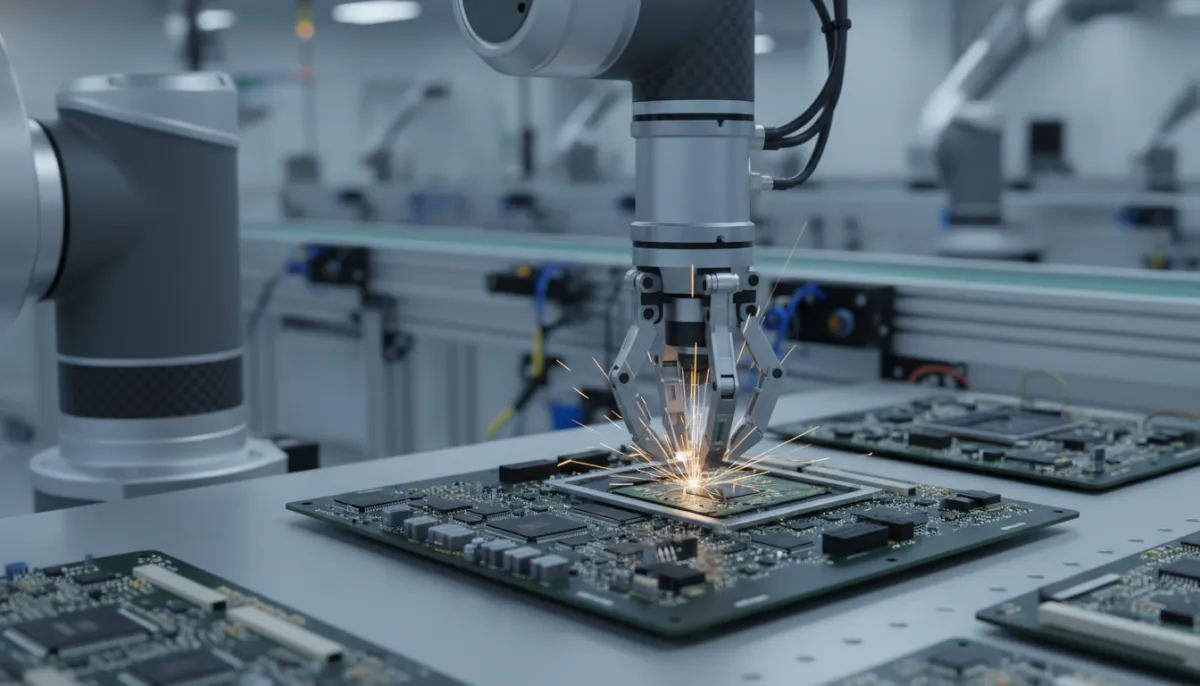
Explore the evolution and impact of factory automation in the context of Industry 4.0, including its advantages, disadvantages, and future potential.
Factory Automation: The Innovative Face of Industry 4.0
In recent years, factory automation has undergone a transformative journey, becoming a focal point in the global industrial landscape, particularly with the advent of Industry 4.0. This evolution expands the reach of automation technology beyond industrial sectors, permeating agriculture, national defense, scientific research, and everyday life. This field of automation is multidisciplinary and has shown significant changes throughout its history. Initially defined during the first industrial revolution as the replacement of human labor with mechanical movements, the second industrial revolution saw a significant leap forward with the advent of electrical technology and mechanization. The third industrial revolution introduced widespread computer usage, transforming automation into a concept that supports not just physical labor but also cognitive tasks. Now, with the fourth industrial revolution, connectivity and artificial intelligence are broadening the scope of automation to encompass the entire product lifecycle.How Automation Works and Its Usage Scenarios
Factory automation consists of a combination of various technologies:- Robotic Systems: Automated machines perform repetitive tasks on production lines.
- IoT (Internet of Things): Inter-device connectivity optimizes production processes through data collection and analysis.
- Artificial Intelligence: Accelerates decision-making processes and enhances production efficiency.
- Automated assembly lines enable rapid and error-free product assembly.
- Smart agricultural systems optimize irrigation and fertilization processes through data analysis.
- Energy management systems monitor energy consumption during production, reducing costs.
- Advantages:
- Increased efficiency: Reduces human errors and speeds up production rates.
- Cost savings: Decreases labor costs in the long run.
- Enhanced safety: Robots handling hazardous tasks reduce workplace accidents.
- Disadvantages:
- Job loss: Automation may lead to the elimination of certain jobs.
- High initial costs: Automation systems often require significant upfront investment.
- Technological dependence: Production may halt if systems malfunction.
- What is factory automation? Factory automation involves the use of robots, software, and other technologies to automate production processes.
- What are the benefits of automation? Benefits include increased efficiency, cost reduction, and enhanced safety.
- Does automation lead to job loss? Yes, the automation of certain tasks can result in a decrease in the workforce.