
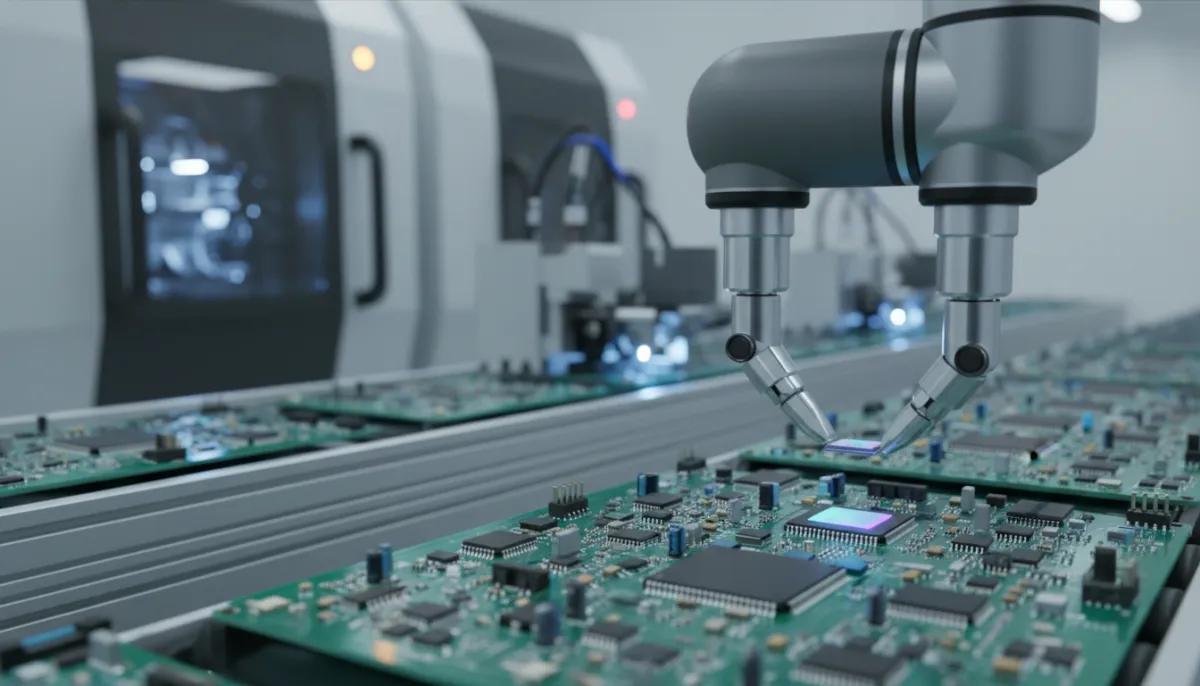
Explore the vital role of AI technology in smart manufacturing, its benefits, challenges, and real-world applications.
The Connection Between Smart Manufacturing and AI
In today's industrial revolution, smart manufacturing stands out as a hot topic. At its core, AI technology plays a pivotal role. This approach aims to enhance production processes, boost efficiency, and reduce costs through systematic applications. But is AI merely a tool in this context, or does it form the foundation of smart manufacturing?
Understanding the Foundations of AI Technology
- Deep Learning: Over the past decade, deep learning has emerged as a significant advancement in the realm of artificial intelligence. This technology enables machines to learn over time by analyzing large datasets.
- Algorithms: The algorithms employed in smart manufacturing are more effective at solving complex problems compared to traditional ones.
- Data Analysis: AI can analyze data to optimize manufacturing processes, ensuring ongoing improvements through learning from the data.
How It Works: Application Scenarios
Smart manufacturing systems operate through various AI applications. Here are some illustrative scenarios:
- Predictive Maintenance: Sensors on production machinery can be analyzed by AI, allowing for the early prediction of malfunctions, thus reducing production downtime.
- Quality Control: By employing image processing techniques, AI can automatically assess product quality, enabling faster and more accurate detection of defects.
- Demand Forecasting: AI analyzes sales data to predict future demand, optimizing inventory management.
Pros and Cons
Advantages
- Increased Efficiency: Smart manufacturing systems boost efficiency by optimizing processes.
- Cost Reduction: By lowering production costs, companies can enhance their profitability.
- Flexibility: These systems enable rapid adaptation to changing market conditions.
Disadvantages
- High Initial Investment: Establishing smart manufacturing systems requires significant upfront costs.
- Technical Knowledge Requirement: Effective management of these systems necessitates a high level of technical expertise.
- Impact on Workforce: Automation may lead to job losses, resulting in shifts within the workforce.
Frequently Asked Questions (FAQs)
- What is smart manufacturing? Smart manufacturing utilizes advanced technologies to optimize production processes.
- How is AI applied in smart manufacturing? AI is used in areas such as data analysis, predictive maintenance, and quality control.
- What are the advantages of smart manufacturing? It offers numerous benefits, including efficiency, cost reduction, and flexibility.
- Is it difficult to implement smart manufacturing systems? Yes, establishing these systems involves high costs and requires technical expertise.
The Background of Technology
AI has been evolving since the 1950s. Starting with simple algorithms, this journey has progressed to complex structures like deep learning and machine learning. Smart manufacturing emerges as a tangible application of these technologies. With the advent of Industry 4.0, the concept of smart factories has gained traction, where machines equipped with data analytics and AI minimize human intervention, streamlining production processes.