
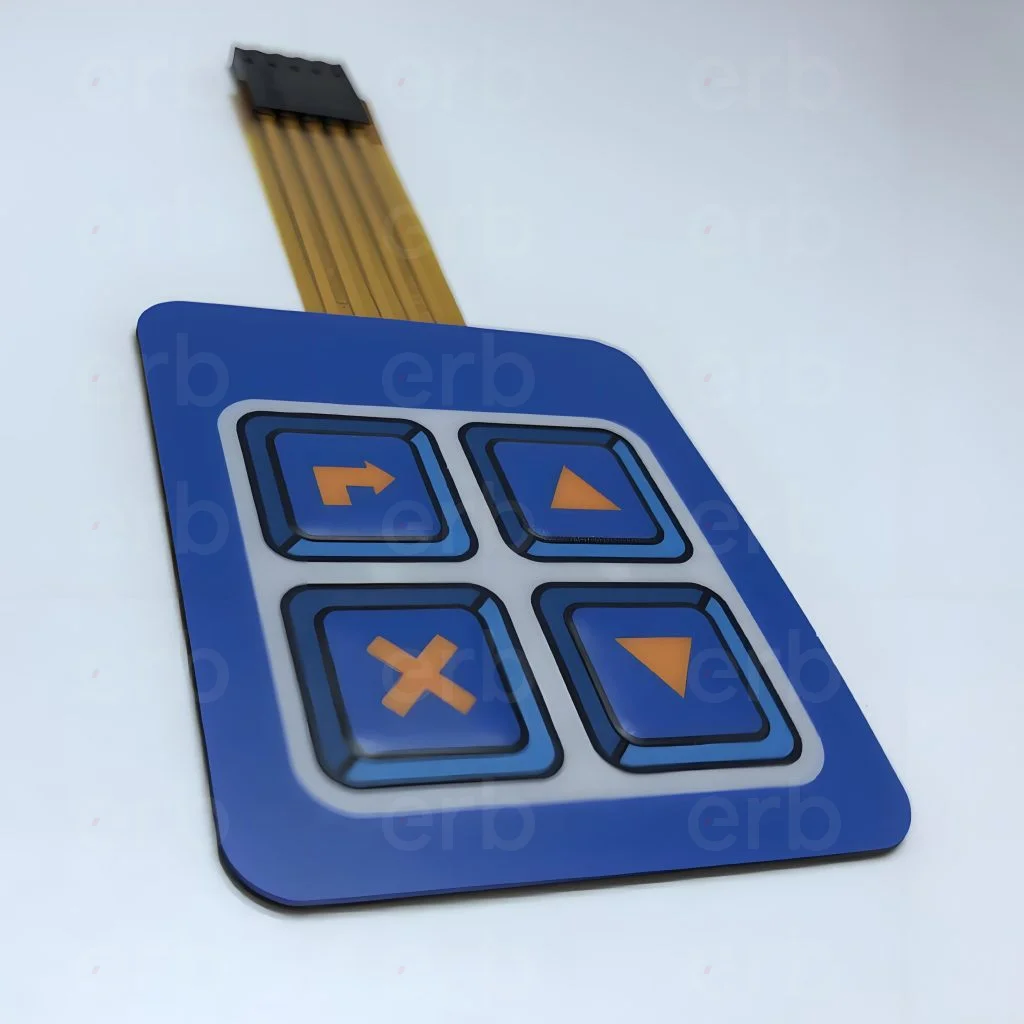
Discover essential testing protocols for FPC membrane switches to ensure reliability and performance in electronic devices.
Exploring FPC Membrane Switches and Their Testing Protocols
FPC Membrane Switches are crucial components in numerous electronic devices, spanning from everyday consumer appliances to vital medical and industrial machinery. The reliability of these switches is paramount, with the integrity of their electrical circuits playing a central role in ensuring consistent performance.
To guarantee durability and an optimal user experience, manufacturers implement a comprehensive suite of electrical tests during and after production. These testing protocols are designed to detect potential issues that could compromise functionality. This article delves into the key tests used to validate the quality and performance of FPC Membrane Switch circuits.
Critical Circuit Testing Procedures
- Continuity and Short Circuit Tests
Among the fundamental assessments for FPC membrane switches is the continuity test. This test ascertains whether there is an uninterrupted pathway for electrical current within each switch and its circuit traces.
Utilizing a multimeter or an automated testing system, each switch is activated, and the resistance within the closed circuit is measured. A low resistance reading—typically below 100 ohms—suggests a strong connection. Conversely, an open circuit or a high resistance reading indicates potential faults, such as a broken trace or loose connections.
Alongside continuity testing, short circuit testing is equally crucial. This assessment ensures that no unintended electrical connections exist between different circuit areas. A short circuit can lead to unpredictable behavior or damage to the connected electronics.
This test involves checking for electrical flow between non-connected conductive lines, where an ideal result would reflect infinite or exceptionally high resistance, confirming adequate circuit isolation.
The Testing Process Explained
The evaluation of FPC membrane switches occurs under various scenarios:
- During Production: Continuity and short circuit tests are essential at every manufacturing stage, allowing early detection of potential errors.
- During Maintenance: After extensive usage, these tests can be applied to maintain devices and avert future failures.
- New Design Development: For newly designed FPC membrane switches, conducting tests on initial prototypes is crucial for ensuring design reliability.
Advantages and Disadvantages of Testing
- Advantages:
- Efficient testing processes streamline production workflows.
- Enhances reliability by preventing potential failures.
- Applicable across a wide range of industries.
- Disadvantages:
- Specialized testing equipment may be needed, potentially increasing costs.
- Inaccurate test results can lead to misinterpretations.
Common Queries on FPC Membrane Switches
- What exactly are FPC membrane switches?
FPC membrane switches are controls typically found on flexible printed circuits, commonly utilized in touch-sensitive panels. - How is continuity testing conducted?
A multimeter is employed to activate the switch and measure circuit resistance, where low resistance indicates a good connection. - Why is short circuit testing vital?
This testing method identifies unwanted electrical flow between circuit components, thus bolstering overall reliability.