
Explore the transformative impact of Surface Mount Technology (SMT) in modern electronics manufacturing, enhancing efficiency and product quality.
Overview of Surface Mount Technology (SMT)
Surface Mount Technology (SMT) represents a transformative approach in the realm of electronics manufacturing. This cutting-edge technique allows for the precise placement and soldering of components directly onto printed circuit boards (PCBs), which significantly boosts both product quality and manufacturing efficiency.
Core Principles of SMTSMT is characterized by its method of attaching components directly to the surface of PCBs, in contrast to older methods that require drilling holes. This innovative technique facilitates the creation of smaller, lighter, and more efficient electronic circuits.
Steps in the SMT Production Workflow- 1. Template Creation
The journey of SMT begins with the development of a PCB template derived from design specifications. This step is vital for accurately forming the circuit layout on the PCB. - 2. Application of Solder Paste
A uniform layer of solder paste is applied to the PCB surface, often using methods such as hot air reflow or dipping. The hot air technique involves spraying a solder-tin alloy onto the PCB, followed by a heating and cooling process to establish the paste layer. - 3. Component Placement
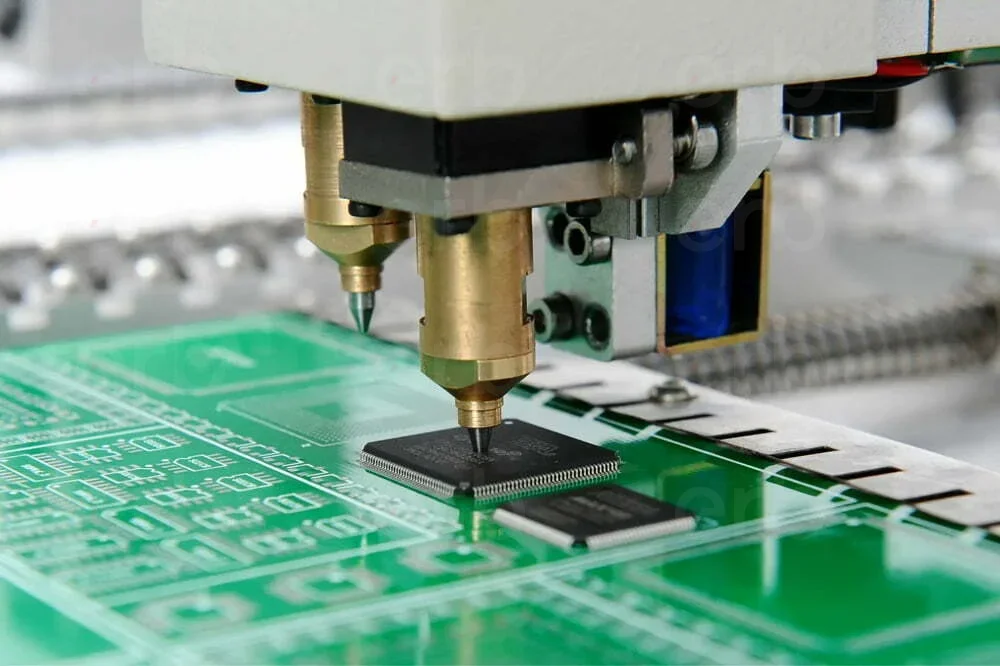
During this crucial stage, a specialized device known as a "pick-and-place" machine is utilized to accurately position components on the PCB. - 4. Soldering Process
After component placement, the soldering phase begins, typically executed in a reflow oven. Here, the solder paste melts to securely attach the components to the PCB. - 5. Quality Inspection and Testing
The final step involves thorough inspection and testing of the assembled PCBs to ensure they meet quality standards, crucial for identifying defects and ensuring reliability.
Advantages of SMT
- Compact Design: SMT enables the use of smaller components, which leads to the creation of more compact circuit boards.
- Higher Production Speed: Automated placement systems significantly enhance the manufacturing speed.
- Improved Performance: SMT circuits exhibit fewer connection points, which helps reduce signal loss and noise interference.
Disadvantages of SMT
- Increased Complexity: SMT processes are generally more complex than traditional methods and require a higher level of technical skill.
- Initial Cost: The setup costs for SMT can be substantial due to the need for specialized equipment.
- Repair Difficulties: Repairing circuits produced with SMT is often more challenging due to the surface-mounted nature of the components.
Surface Mount Technology is widely applied across multiple sectors:
- **Consumer Electronics:** Perfect for devices like smartphones and tablets that demand space efficiency.
- **Automotive Industry:** Frequently utilized in electronic control units and various sensors.
- **Healthcare Devices:** Essential in the manufacture of high-precision medical equipment.
- How does SMT differ from Through-Hole Technology (THT)?
While SMT attaches components directly to the PCB surface, THT involves inserting components through holes in the PCB. - What is the primary benefit of using SMT?
The most significant advantage of SMT is its capacity to accommodate smaller components, thus speeding up the production process. - Are SMT-manufactured products durable?
Durability can vary based on the specific design and application, but generally, SMT products are known for their robustness.